As a supplier of M42 High Speed Steel Sheet, I've been frequently asked about the impact resistance of this remarkable material. In this blog, I'll delve into the concept of impact resistance, explore how M42 High Speed Steel Sheet fares in this regard, and discuss the factors that influence its performance.
Understanding Impact Resistance
Impact resistance refers to a material's ability to withstand sudden forces or shocks without undergoing significant deformation or failure. When a force is applied suddenly to a material, it creates stress waves that propagate through the material. If the material has high impact resistance, it can absorb and dissipate these stress waves, preventing damage. Conversely, a material with low impact resistance may crack, fracture, or deform under the same impact.
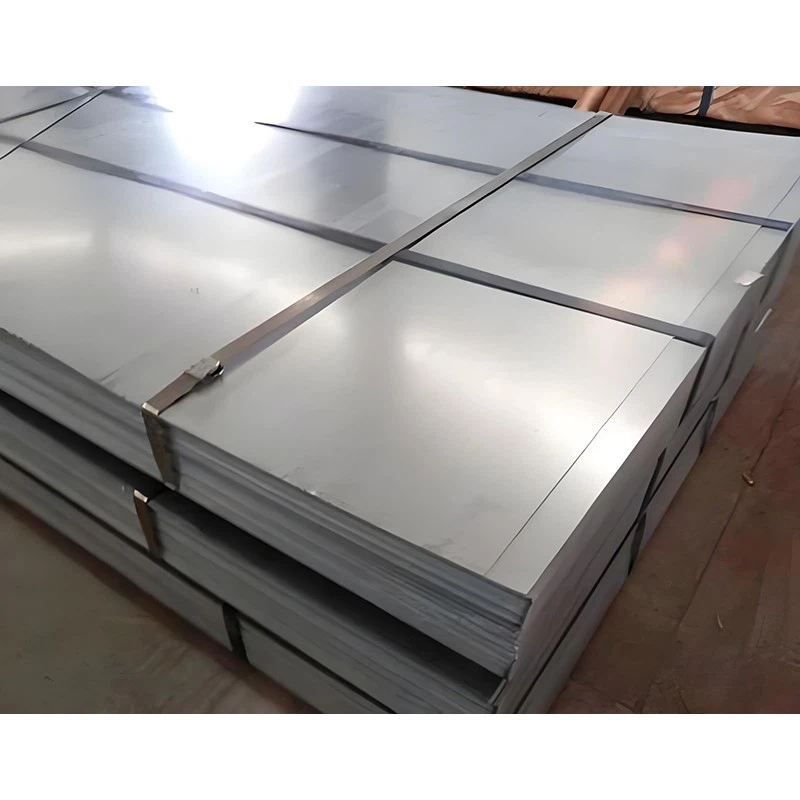

Impact Resistance of M42 High Speed Steel Sheet
M42 High Speed Steel Sheet is renowned for its excellent combination of hardness, wear resistance, and toughness. These properties contribute to its relatively high impact resistance compared to many other materials.
Hardness and Wear Resistance
The high carbon and alloy content in M42 High Speed Steel Sheet result in a hard microstructure. This hardness allows the material to resist abrasion and wear, which is crucial in applications where the sheet is subjected to repeated impacts. For example, in cutting tools, the ability to maintain a sharp edge under high - impact cutting operations is essential. The wear resistance of M42 helps it withstand the forces generated during cutting, reducing the likelihood of chipping or premature failure.
Toughness
Toughness is the ability of a material to absorb energy and deform plastically before fracturing. M42 High Speed Steel Sheet has good toughness, which means it can absorb a significant amount of energy during an impact. This is due to its carefully engineered alloy composition and heat treatment process. The alloying elements such as cobalt, tungsten, and molybdenum enhance the material's strength and toughness. When an impact occurs, the material can deform slightly, dissipating the energy and preventing the formation of cracks.
Factors Influencing the Impact Resistance of M42 High Speed Steel Sheet
Heat Treatment
The heat treatment process plays a vital role in determining the impact resistance of M42 High Speed Steel Sheet. Proper quenching and tempering can optimize the material's microstructure, balancing hardness and toughness. If the heat treatment is not carried out correctly, the material may become too brittle or too soft. For instance, over - quenching can lead to a high - hardness but low - toughness microstructure, making the sheet more prone to cracking under impact. On the other hand, under - tempering may result in residual stresses, which can also reduce the impact resistance.
Alloy Composition
The specific alloy composition of M42 High Speed Steel Sheet affects its impact resistance. As mentioned earlier, elements like cobalt, tungsten, and molybdenum contribute to the material's strength and toughness. Cobalt, for example, increases the hot hardness of the steel, allowing it to maintain its properties at high temperatures. Tungsten and molybdenum form hard carbides, which enhance wear resistance and also contribute to the overall strength of the material. A precise balance of these alloying elements is necessary to achieve the best impact resistance.
Surface Finish
The surface finish of the M42 High Speed Steel Sheet can also influence its impact resistance. A smooth surface finish reduces stress concentrations, which are potential sites for crack initiation. Rough surfaces or surface defects can act as stress raisers, making the sheet more vulnerable to cracking under impact. Therefore, proper surface treatment and finishing processes are important to improve the impact resistance of the sheet.
Applications Benefiting from the Impact Resistance of M42 High Speed Steel Sheet
Cutting Tools
In the manufacturing industry, M42 High Speed Steel Sheet is widely used in the production of cutting tools such as drills, end mills, and saw blades. These tools are often subjected to high - speed cutting operations, which generate significant impact forces. The high impact resistance of M42 allows the cutting tools to maintain their shape and performance over extended periods, reducing the frequency of tool replacement and improving productivity.
Metal Forming Dies
Metal forming dies are used to shape metal parts through processes like stamping and forging. These operations involve high - impact forces as the metal is deformed. M42 High Speed Steel Sheet's impact resistance makes it an ideal material for these dies. It can withstand the repeated impacts during the forming process without deforming or cracking, ensuring the accuracy and quality of the formed parts.
Comparison with Other Steel Sheets
High Speed Steel Plate
When comparing M42 High Speed Steel Sheet with High Speed Steel Plate, the sheet generally has better impact resistance in applications where thin - section components are required. The thinner cross - section of the sheet allows for more efficient energy absorption during an impact. However, high - speed steel plates may have advantages in applications where higher load - bearing capacity is needed, as they can be thicker and more massive.
Special Steel Sheet
Special Steel Sheet encompasses a wide range of materials with different properties. Some special steel sheets may have high corrosion resistance but lower impact resistance compared to M42. M42's combination of high hardness, wear resistance, and impact resistance makes it suitable for applications where both cutting performance and impact durability are required.
Cold Rolled Steel Sheets
Cold Rolled Steel Sheets are known for their smooth surface finish and good dimensional accuracy. However, in terms of impact resistance, M42 High Speed Steel Sheet outperforms cold - rolled steel sheets. Cold - rolled steel sheets are typically softer and less wear - resistant, making them more prone to deformation and damage under high - impact conditions.
Conclusion
The impact resistance of M42 High Speed Steel Sheet is a result of its unique combination of hardness, wear resistance, and toughness. Through proper heat treatment, alloy composition, and surface finish, the impact resistance can be optimized for various applications. Whether it's in cutting tools or metal forming dies, M42's ability to withstand sudden impacts makes it a valuable material in the manufacturing industry.
If you're in the market for high - quality M42 High Speed Steel Sheet, I invite you to reach out for a detailed discussion. We can tailor our products to meet your specific requirements, ensuring that you get the best performance and value for your investment. Contact us today to start the procurement process and explore how our M42 High Speed Steel Sheet can enhance your operations.
References
- ASM Handbook Volume 1: Properties and Selection: Irons, Steels, and High - Performance Alloys.
- Metals Handbook Desk Edition, Third Edition.
- Technical papers on high - speed steel research from leading metallurgical journals.