

As a trusted supplier of M42 High Speed Steel Sheet, I often encounter inquiries regarding its various properties, one of the most commonly asked being the elongation of this remarkable material. In this blog, I aim to delve into the concept of elongation in M42 High Speed Steel Sheet, exploring its significance, influencing factors, and practical implications.
Understanding Elongation
Elongation is a crucial mechanical property that measures the ability of a material to deform plastically before fracture under tensile stress. It is typically expressed as a percentage of the original length of the specimen that has been stretched until it breaks. In the context of M42 High Speed Steel Sheet, elongation provides valuable insights into its ductility and formability.
Ductility refers to the material's capacity to undergo significant plastic deformation without rupture. A higher elongation percentage indicates greater ductility, meaning the steel sheet can be stretched, bent, or formed into various shapes without cracking or breaking. This property is particularly important in applications where the material needs to be shaped or machined, such as in the manufacturing of cutting tools, dies, and molds.
Factors Affecting the Elongation of M42 High Speed Steel Sheet
The elongation of M42 High Speed Steel Sheet is influenced by several factors, including its chemical composition, heat treatment, and manufacturing process.
Chemical Composition
M42 High Speed Steel is a high - alloy steel with a complex chemical composition. It typically contains elements such as tungsten (W), molybdenum (Mo), chromium (Cr), vanadium (V), and cobalt (Co). These alloying elements play a crucial role in determining the mechanical properties of the steel, including its elongation.

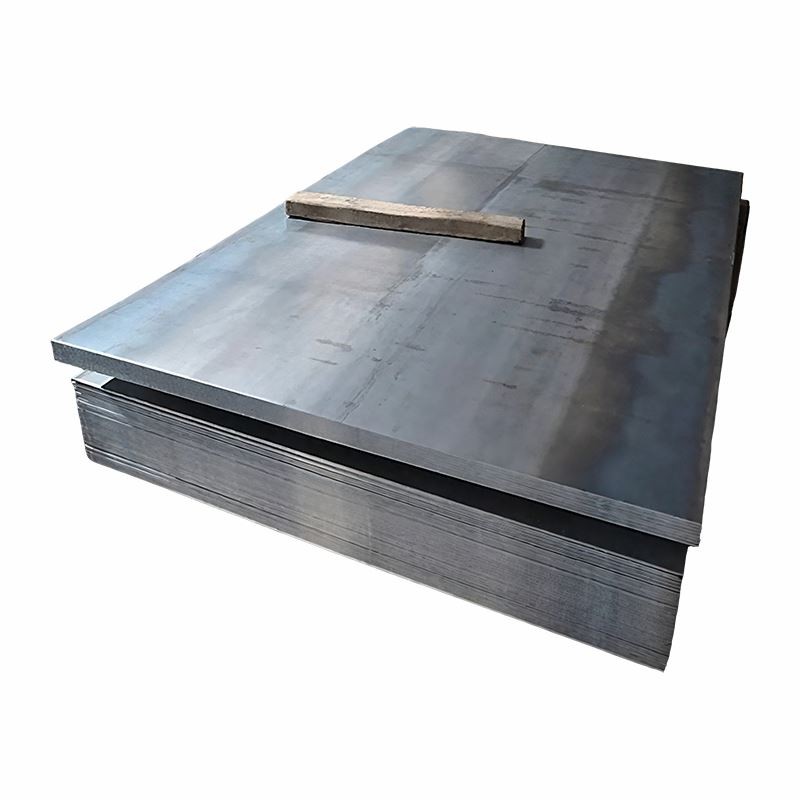
For example, tungsten and molybdenum contribute to the high hardness and wear resistance of M42 steel, but excessive amounts can reduce its ductility and elongation. On the other hand, cobalt can enhance the hot hardness and red hardness of the steel, while also improving its toughness to some extent, which may have a positive impact on elongation.
Heat Treatment
Heat treatment is a critical process in the production of M42 High Speed Steel Sheet. The proper heat treatment process can significantly improve the mechanical properties of the steel, including its elongation.
The typical heat treatment for M42 steel involves quenching and tempering. Quenching rapidly cools the steel from a high temperature to form a hard martensitic structure. However, this structure is often brittle. Tempering is then carried out at a lower temperature to relieve internal stresses, improve toughness, and increase elongation. The tempering temperature and time need to be carefully controlled to achieve the optimal balance between hardness and ductility.
Manufacturing Process
The manufacturing process of M42 High Speed Steel Sheet also affects its elongation. Processes such as hot rolling and cold rolling can have different impacts on the microstructure and mechanical properties of the steel.
Hot Rolled Steel Sheets are produced at high temperatures, which allows the steel to be easily deformed and shaped. Hot rolling can refine the grain structure of the steel, improving its ductility and elongation. Cold rolling, on the other hand, is carried out at room temperature and can increase the hardness and strength of the steel, but may reduce its elongation due to work hardening.
Typical Elongation Values of M42 High Speed Steel Sheet
The elongation of M42 High Speed Steel Sheet can vary depending on the specific grade, heat treatment, and manufacturing process. Generally, the elongation of well - heat - treated M42 High Speed Steel Sheet can range from 3% to 6%.
It's important to note that these values are approximate and can be influenced by many factors. For example, if the steel sheet is subjected to improper heat treatment or contains impurities, its elongation may be lower than the typical range.
Practical Implications of Elongation in M42 High Speed Steel Sheet
The elongation of M42 High Speed Steel Sheet has significant practical implications in various applications.
Machining and Forming
In machining and forming operations, such as cutting, bending, and stamping, the elongation of the steel sheet determines its ability to be shaped without cracking. A higher elongation allows for more complex and precise forming operations, reducing the risk of material failure during the manufacturing process.
For example, when manufacturing cutting tools, a steel sheet with good elongation can be easily ground and shaped into the desired tool geometry. This ensures the quality and performance of the final product.
Service Life
The elongation of M42 High Speed Steel Sheet also affects its service life in practical applications. In applications where the steel sheet is subjected to dynamic loads or cyclic stresses, a higher elongation can help the material absorb energy and resist fatigue cracking. This means that the steel sheet is less likely to fail prematurely, increasing its service life and reliability.
Comparison with Other High - Speed Steels
When comparing M42 High Speed Steel Sheet with other types of high - speed steels, such as M2 High Speed Steel Plate, the elongation can vary.
M2 High Speed Steel is another popular high - speed steel grade, known for its good balance of hardness, toughness, and wear resistance. Generally, M42 High Speed Steel has a relatively lower elongation compared to M2 High Speed Steel due to its higher alloy content, especially the presence of cobalt. However, M42 steel offers superior hot hardness and cutting performance, making it more suitable for high - speed cutting applications.
Conclusion
In conclusion, the elongation of M42 High Speed Steel Sheet is an important mechanical property that reflects its ductility and formability. It is influenced by factors such as chemical composition, heat treatment, and manufacturing process. Understanding the elongation of M42 High Speed Steel Sheet is crucial for selecting the appropriate material for specific applications, ensuring the quality and performance of the final products.
If you are in the market for high - quality M42 High Speed Steel Sheet, we are here to assist you. Our company offers a wide range of M42 High Speed Steel Sheets with excellent mechanical properties, including appropriate elongation values. Whether you need sheets for cutting tools, dies, or other applications, we can provide you with the right solution. Contact us today to start a procurement discussion and find out how our M42 High Speed Steel Sheet can meet your specific requirements.
References
- ASM Handbook Volume 1: Properties and Selection: Irons, Steels, and High - Performance Alloys.
- Metals Handbook Desk Edition, Third Edition.


