As a supplier of Hot Rolled Steel Sheets, I've been deeply involved in the steel industry for quite some time. While hot rolled steel sheets are widely used and have numerous advantages, it's important to also understand their disadvantages. This knowledge can help our customers make more informed decisions when choosing the right steel products for their specific applications.
1. Surface Finish
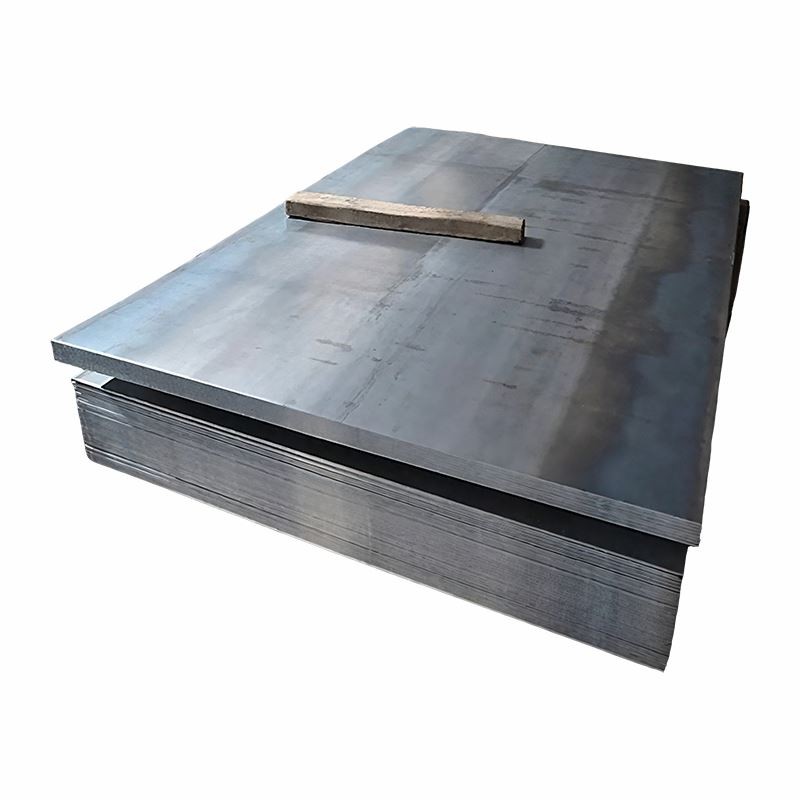
One of the most prominent disadvantages of hot rolled steel sheets is their relatively poor surface finish. During the hot rolling process, the steel is heated to a very high temperature and then passed through rollers. At this high temperature, the steel reacts with oxygen in the air, forming a layer of iron oxide, commonly known as scale. This scale gives the surface of hot rolled steel sheets a rough and uneven appearance.
The presence of scale can be a significant issue in applications where a smooth and aesthetically pleasing surface is required. For example, in architectural applications such as building facades or interior decorations, the rough surface of hot rolled steel sheets may not meet the design requirements. Even in industrial applications, the scale can cause problems. It can interfere with the adhesion of paints, coatings, or other surface treatments, reducing the effectiveness and durability of these protective layers.
In contrast, Cold Rolled Steel Sheets typically have a much smoother surface finish. Cold rolling is performed at room temperature, which prevents the formation of scale. As a result, cold rolled steel sheets are often preferred in applications where surface quality is of utmost importance.
2. Dimensional Accuracy
Hot rolled steel sheets generally have lower dimensional accuracy compared to cold rolled steel sheets. The hot rolling process involves high temperatures and large forces, which can cause the steel to expand and contract unevenly. This thermal expansion and contraction, along with the mechanical forces exerted during rolling, can lead to variations in the thickness, width, and length of the steel sheets.
In applications where precise dimensions are crucial, such as in the manufacturing of precision machinery or electronic components, these dimensional variations can be a major drawback. For instance, if a steel sheet is used to fabricate a part with tight tolerances, the dimensional inaccuracies of hot rolled steel may result in parts that do not fit properly or function as intended.
Cold rolled steel sheets, on the other hand, are produced with greater precision. The cold rolling process allows for more accurate control of the dimensions, ensuring that the final products meet the required specifications.
3. Mechanical Property Variations
The mechanical properties of hot rolled steel sheets can be more inconsistent compared to other types of steel products. The high-temperature environment during hot rolling can cause variations in the microstructure of the steel, which in turn affects its mechanical properties such as strength, hardness, and ductility.

These variations can be a concern in applications where consistent mechanical performance is essential. For example, in the construction of bridges or high-rise buildings, the structural integrity depends on the reliable mechanical properties of the steel used. If the mechanical properties of hot rolled steel sheets vary significantly, it can pose a risk to the safety and stability of the structure.
To achieve more consistent mechanical properties, additional heat treatment or processing steps may be required for hot rolled steel sheets. However, these additional steps increase the cost and complexity of the manufacturing process.
4. Limited Hardness and Strength
Hot rolled steel sheets typically have lower hardness and strength compared to some other types of steel, such as M42 High Speed Steel Sheet. The hot rolling process, which involves heating the steel to a high temperature and then rapidly cooling it, results in a relatively coarse-grained microstructure. This coarse-grained structure generally leads to lower hardness and strength values.
In applications where high hardness and strength are required, such as in the manufacturing of cutting tools or high-stress components, hot rolled steel sheets may not be the best choice. M42 high speed steel, for example, is specifically designed to have high hardness, wear resistance, and heat resistance, making it suitable for applications where the steel is subjected to extreme conditions.
5. Corrosion Resistance
Hot rolled steel sheets have relatively poor corrosion resistance due to the presence of scale on their surface. The scale layer is porous and can absorb moisture and other corrosive substances, which can accelerate the corrosion process. Once the scale starts to flake off, it exposes the underlying steel to the environment, further increasing the risk of corrosion.
In outdoor or humid environments, the corrosion of hot rolled steel sheets can be a serious problem. It can lead to a reduction in the thickness of the steel, weakening the structure and reducing its service life. To improve the corrosion resistance of hot rolled steel sheets, additional surface treatments such as galvanizing or painting are often required. However, these treatments add to the cost and complexity of the product.
Conclusion
Despite these disadvantages, hot rolled steel sheets still have their place in the market. They are often more cost-effective than other types of steel products, especially for large-scale applications where surface finish, dimensional accuracy, and high mechanical properties are not the primary concerns.
At our company, we understand the unique characteristics of hot rolled steel sheets and can provide our customers with professional advice on whether they are the right choice for their specific needs. If you are considering using Hot Rolled Steel Sheets for your project, we encourage you to contact us for further discussion. Our team of experts is ready to assist you in making the best decision and ensuring that you get the highest quality steel products at a competitive price.
References
- ASM Handbook Committee. (2004). ASM Handbook Volume 1: Properties and Selection: Irons, Steels, and High-Performance Alloys. ASM International.
- Kalpakjian, S., & Schmid, S. R. (2010). Manufacturing Engineering and Technology. Pearson Prentice Hall.
- Totten, G. E., & MacKenzie, D. L. (2003). Handbook of Aluminum: Physical Metallurgy and Processes. CRC Press.