As a supplier of M42 High Speed Steel Sheets, I understand the critical importance of accurately testing the hardness of these sheets. Hardness is a fundamental property that directly impacts the performance and durability of M42 steel in various applications, from cutting tools to industrial machinery components. In this blog post, I'll share some key methods for testing the hardness of M42 High Speed Steel Sheets, providing you with valuable insights to ensure the quality of your purchases.
Understanding M42 High Speed Steel
Before delving into the testing methods, it's essential to have a basic understanding of M42 High Speed Steel. M42 is a high - cobalt high - speed steel alloy known for its excellent red hardness, wear resistance, and toughness. These properties make it a popular choice for applications where cutting tools need to maintain their sharpness and performance at high temperatures. The chemical composition of M42 typically includes elements such as tungsten, molybdenum, chromium, vanadium, and cobalt, which contribute to its unique properties.
Importance of Hardness Testing
Hardness testing is crucial for several reasons. Firstly, it helps to ensure that the M42 High Speed Steel Sheets meet the specified quality standards. Different applications require different levels of hardness, and accurate testing allows manufacturers and end - users to select the appropriate material. Secondly, hardness is closely related to other mechanical properties such as wear resistance and toughness. By testing the hardness, we can indirectly assess these properties and predict how the steel will perform in real - world applications.
Common Hardness Testing Methods for M42 High Speed Steel Sheets
Rockwell Hardness Test
The Rockwell hardness test is one of the most widely used methods for testing the hardness of metals, including M42 High Speed Steel Sheets. This test measures the depth of penetration of an indenter into the material under a specific load. The Rockwell scale uses different indenters and loads depending on the hardness range of the material. For M42 steel, the Rockwell C scale (HRC) is commonly used.
To perform a Rockwell hardness test on an M42 High Speed Steel Sheet, a diamond cone indenter is used with a major load of 150 kgf. The test is carried out by first applying a minor load of 10 kgf to seat the indenter on the surface of the sheet. Then, the major load is applied for a specified time, usually 15 seconds. After the major load is removed, the depth of penetration is measured, and the hardness value is read directly from the Rockwell hardness tester.
The advantage of the Rockwell hardness test is its speed and simplicity. It can provide a quick and accurate measurement of the hardness of the M42 steel sheet. However, it has some limitations. The test is sensitive to surface roughness and the presence of small defects on the surface of the sheet. Therefore, it's important to ensure that the surface of the sheet is properly prepared before testing.
Vickers Hardness Test
The Vickers hardness test is another popular method for testing the hardness of M42 High Speed Steel Sheets. This test uses a square - based pyramid indenter to make an indentation on the surface of the material under a specific load. The size of the indentation is measured using a microscope, and the hardness value is calculated based on the load and the area of the indentation.
To perform a Vickers hardness test on an M42 steel sheet, a load is applied to the indenter for a specified time, usually 10 - 15 seconds. After the load is removed, the diagonal lengths of the indentation are measured using a microscope. The Vickers hardness number (HV) is then calculated using the formula:
[HV=\frac{1.8544F}{d^{2}}]
where (F) is the applied load in kilograms - force and (d) is the average diagonal length of the indentation in millimeters.
The Vickers hardness test has several advantages. It can be used to test a wide range of hardness values, and it provides a more accurate measurement of the hardness compared to the Rockwell test, especially for materials with small grain sizes or complex microstructures. However, the Vickers test is more time - consuming and requires more skill to perform compared to the Rockwell test.
Brinell Hardness Test
The Brinell hardness test is a relatively old but still widely used method for testing the hardness of metals. This test uses a hard steel or carbide ball indenter to make an indentation on the surface of the material under a large load. The diameter of the indentation is measured using a microscope, and the Brinell hardness number (HB) is calculated based on the load and the surface area of the indentation.
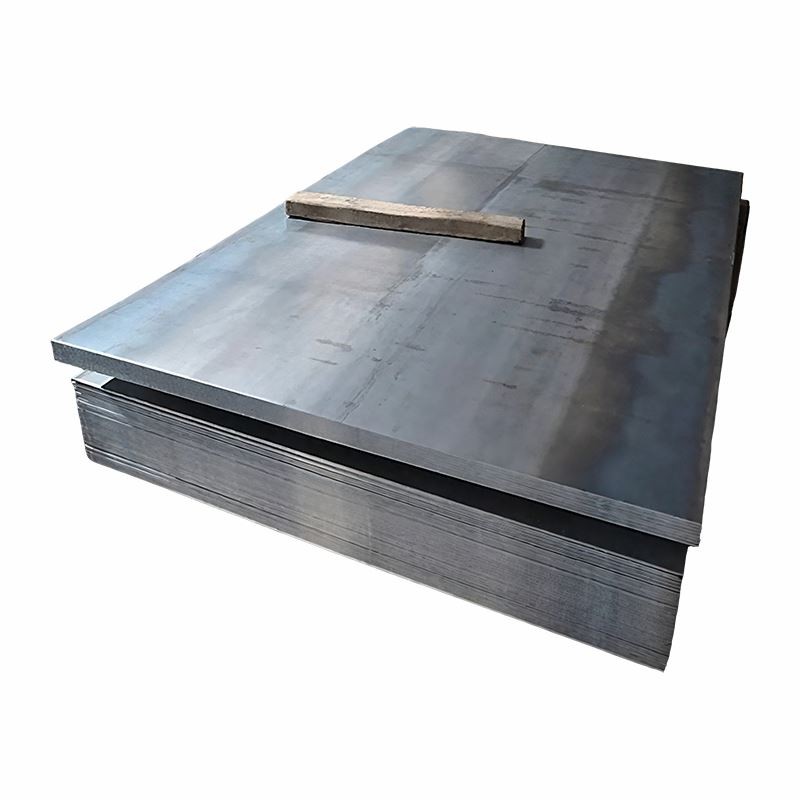

To perform a Brinell hardness test on an M42 High Speed Steel Sheet, a large load (usually 3000 kgf) is applied to a 10 - mm diameter ball indenter for a specified time, usually 10 - 15 seconds. After the load is removed, the diameter of the indentation is measured using a microscope. The Brinell hardness number is then calculated using the formula:
[HB=\frac{2F}{\pi D(D - \sqrt{D^{2}-d^{2}})}]
where (F) is the applied load in kilograms - force, (D) is the diameter of the ball indenter in millimeters, and (d) is the diameter of the indentation in millimeters.
The Brinell hardness test is suitable for testing materials with a relatively large grain size or for materials that are too soft or too hard for the Rockwell or Vickers tests. However, it has some limitations. The test causes a relatively large indentation on the surface of the material, which may not be acceptable for some applications.
Factors Affecting Hardness Testing Results
Several factors can affect the results of hardness testing on M42 High Speed Steel Sheets. These include:
Surface Preparation
The surface of the M42 steel sheet must be properly prepared before testing. Any surface roughness, oxidation, or contaminants can affect the accuracy of the hardness measurement. The sheet should be ground, polished, and cleaned to ensure a smooth and clean surface.
Testing Location
The location where the hardness test is performed on the sheet can also affect the results. The hardness of the steel may vary across the thickness and width of the sheet due to factors such as heat treatment and rolling processes. Therefore, it's important to take multiple measurements at different locations on the sheet and calculate the average hardness value.
Heat Treatment
The heat treatment process has a significant impact on the hardness of M42 High Speed Steel Sheets. Different heat treatment cycles can result in different levels of hardness. For example, quenching and tempering can increase the hardness of the steel, while annealing can decrease it. Therefore, it's important to know the heat treatment history of the sheet when interpreting the hardness test results.
Comparison with Other Steel Sheets
When considering M42 High Speed Steel Sheets, it's also useful to compare them with other types of steel sheets, such as Hot Rolled Steel Sheets and Cold Rolled Steel Sheets. Hot rolled steel sheets are produced by rolling the steel at high temperatures, which results in a rough surface finish and a relatively lower hardness compared to cold rolled steel sheets. Cold rolled steel sheets are produced by rolling the steel at room temperature, which results in a smoother surface finish and a higher hardness.
However, compared to High Speed Steel Plate, both hot rolled and cold rolled steel sheets have lower red hardness and wear resistance. M42 High Speed Steel Sheets are specifically designed for applications where high cutting speeds and high temperatures are involved, such as in the manufacturing of cutting tools.
Conclusion
Testing the hardness of M42 High Speed Steel Sheets is a critical step in ensuring their quality and performance. By using methods such as the Rockwell, Vickers, and Brinell hardness tests, we can accurately measure the hardness of the sheets and select the appropriate material for different applications. It's important to consider factors such as surface preparation, testing location, and heat treatment when performing hardness tests.
If you're in the market for high - quality M42 High Speed Steel Sheets, we are here to help. Our sheets are carefully manufactured and tested to ensure they meet the highest quality standards. We offer a wide range of sizes and thicknesses to meet your specific requirements. Contact us today to start a procurement discussion and find the perfect M42 High Speed Steel Sheets for your needs.
References
- ASM Handbook Volume 8: Mechanical Testing and Evaluation. ASM International.
- Callister, W. D., & Rethwisch, D. G. (2012). Materials Science and Engineering: An Introduction. Wiley.
- ISO 6506 - 1:2014 Metallic materials - Brinell hardness test - Part 1: Test method.
- ISO 6507 - 1:2018 Metallic materials - Vickers hardness test - Part 1: Test method.
- ISO 6508 - 1:2016 Metallic materials - Rockwell hardness test - Part 1: Test method.