

In the dynamic landscape of manufacturing, high-speed steel plate production has witnessed remarkable advancements driven by new technologies. As a dedicated supplier of High Speed Steel Plate, I've had the privilege of closely observing and participating in these technological revolutions. This blog post will delve into some of the cutting-edge technologies that are currently being applied to high-speed steel plate production, exploring how they enhance quality, efficiency, and innovation in the industry.
Advanced Alloying and Metallurgy
One of the cornerstones of high-speed steel plate production is the development of advanced alloying techniques. High-speed steel is typically an alloy of iron, carbon, and various other elements such as tungsten, molybdenum, chromium, and vanadium. The precise combination and proportion of these elements determine the steel's properties, including hardness, toughness, wear resistance, and heat resistance.
New metallurgical research has led to the creation of more refined alloy compositions. For example, the use of microalloying elements in controlled amounts can significantly improve the steel's microstructure and mechanical properties. These microalloying elements can form fine precipitates during the heat treatment process, which pin grain boundaries and prevent grain growth. This results in a finer-grained structure, enhancing the steel's strength and toughness.
In addition, the development of new melting and refining technologies has improved the purity of high-speed steel. Vacuum induction melting (VIM) and electroslag remelting (ESR) are two widely used processes in the production of high-quality high-speed steel. VIM allows for precise control of the alloy composition and reduces the presence of impurities such as sulfur, phosphorus, and non-metallic inclusions. ESR further refines the steel by remelting it under a slag layer, which helps to remove remaining impurities and improve the steel's homogeneity.
Precision Rolling Technologies
Rolling is a crucial process in high-speed steel plate production, as it determines the final dimensions, surface quality, and mechanical properties of the plates. Recent advancements in rolling technology have focused on achieving higher precision and better control over the rolling process.
One of the key developments is the use of computer-controlled rolling mills. These mills are equipped with advanced sensors and control systems that can monitor and adjust various parameters during the rolling process, such as roll force, roll speed, and temperature. This real-time monitoring and control ensure that the plates are rolled to the desired dimensions and with consistent quality.
Another important innovation is the application of advanced rolling techniques, such as controlled rolling and accelerated cooling. Controlled rolling involves rolling the steel at specific temperatures and strain rates to achieve a desired microstructure. By carefully controlling these parameters, the steel's mechanical properties can be optimized. Accelerated cooling, on the other hand, involves rapidly cooling the steel after rolling to enhance its hardness and strength. This can be achieved through the use of water sprays or other cooling media.
Heat Treatment Innovations
Heat treatment is a critical step in high-speed steel plate production, as it determines the final hardness, toughness, and wear resistance of the plates. New heat treatment technologies have been developed to improve the efficiency and effectiveness of this process.
One of the significant advancements is the use of induction heating for heat treatment. Induction heating is a rapid and energy-efficient method that can heat the steel to the desired temperature in a short time. This allows for precise control of the heating rate and temperature, which is essential for achieving the desired microstructure and properties.
Another innovation is the development of new quenching and tempering processes. Quenching is the process of rapidly cooling the steel from a high temperature to harden it, while tempering is the process of reheating the quenched steel to reduce its brittleness and improve its toughness. New quenching media, such as polymer-based quenching fluids, have been developed to provide better control over the cooling rate and reduce the risk of cracking during quenching.
In addition, the use of advanced heat treatment simulation software has become increasingly common in the industry. This software allows engineers to simulate the heat treatment process and predict the resulting microstructure and properties of the steel. By using this software, they can optimize the heat treatment parameters and reduce the need for costly trial-and-error experiments.

Surface Treatment Technologies
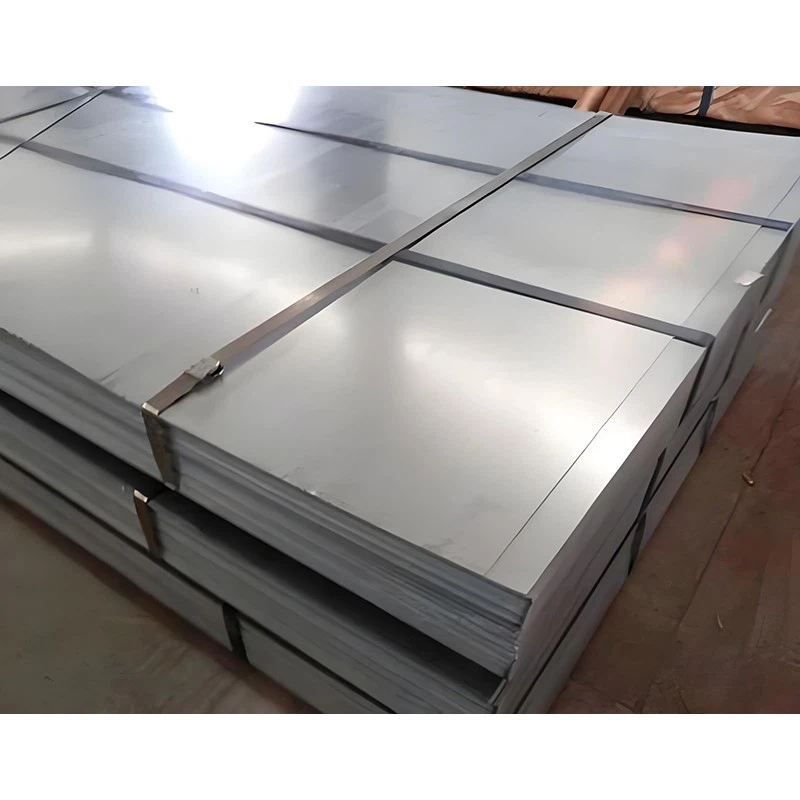
Surface treatment is an important aspect of high-speed steel plate production, as it can improve the plate's corrosion resistance, wear resistance, and aesthetic appearance. New surface treatment technologies have been developed to enhance the performance of high-speed steel plates.
One of the widely used surface treatment methods is coating. Various types of coatings, such as titanium nitride (TiN), titanium carbonitride (TiCN), and aluminum titanium nitride (AlTiN), can be applied to the surface of high-speed steel plates to improve their wear resistance and hardness. These coatings are typically applied using physical vapor deposition (PVD) or chemical vapor deposition (CVD) techniques, which can provide a thin, uniform, and adherent coating on the steel surface.
Another surface treatment technology is nitriding. Nitriding is a process that involves diffusing nitrogen into the surface of the steel to form a hard nitride layer. This layer can significantly improve the steel's wear resistance, corrosion resistance, and fatigue strength. New nitriding processes, such as plasma nitriding and ion nitriding, have been developed to provide better control over the nitriding process and achieve a more uniform and hard nitride layer.
Digitalization and Industry 4.0
The concept of Industry 4.0, which emphasizes the integration of digital technologies into manufacturing processes, has also had a significant impact on high-speed steel plate production. Digitalization and automation have enabled manufacturers to improve productivity, quality control, and supply chain management.
One of the key aspects of Industry 4.0 in high-speed steel plate production is the use of the Internet of Things (IoT). IoT devices, such as sensors and smart meters, can be installed throughout the production process to collect real-time data on various parameters, such as temperature, pressure, and vibration. This data can be analyzed using advanced analytics tools to identify potential issues, optimize production processes, and predict maintenance needs.
In addition, the use of artificial intelligence (AI) and machine learning (ML) algorithms has become increasingly common in the industry. These algorithms can analyze large amounts of data to identify patterns and trends, which can be used to optimize production processes, improve quality control, and develop new products. For example, AI and ML can be used to predict the mechanical properties of high-speed steel plates based on their chemical composition and processing parameters, allowing for more precise quality control.
Conclusion
The application of new technologies in high-speed steel plate production has brought about significant improvements in quality, efficiency, and innovation. From advanced alloying and metallurgy to precision rolling, heat treatment, surface treatment, and digitalization, these technologies have enabled manufacturers to produce high-quality high-speed steel plates that meet the demanding requirements of various industries.
As a supplier of High Speed Steel Plate, I am committed to staying at the forefront of these technological advancements. By investing in research and development and adopting the latest technologies, we can continue to provide our customers with the highest quality products and the best possible service.
If you are interested in our high-speed steel plates, including M42 High Speed Steel Sheet and Special Steel Sheet, or have any questions about our products or services, please feel free to contact us. We look forward to discussing your specific requirements and working with you to find the best solutions for your needs.
References
- ASM Handbook Committee. (2007). ASM Handbook Volume 1: Properties and Selection: Irons, Steels, and High-Performance Alloys. ASM International.
- Bhadeshia, H. K. D. H., & Honeycombe, R. W. K. (2017). Steels: Microstructure and Properties. Elsevier.
- Totten, G. E., & MacKenzie, D. S. (2003). Handbook of Steel Heat Treatment: Metallurgy and Technologies. CRC Press.


