

The yield strength of hot rolled steel sheets is a critical property that significantly influences their performance and applications in various industries. As a reputable supplier of hot rolled steel sheets, I am deeply familiar with this fundamental characteristic and its implications. In this blog, I will delve into what yield strength is, how it is determined for hot rolled steel sheets, and its importance in practical use.
Understanding Yield Strength
Yield strength is defined as the stress at which a material begins to deform plastically. Before reaching the yield strength, the material behaves elastically, meaning that it will return to its original shape once the applied stress is removed. However, when the stress exceeds the yield strength, the material undergoes permanent deformation. This is a crucial concept because it helps engineers and manufacturers understand the limits of a material's use.
For hot rolled steel sheets, the yield strength represents the maximum stress they can withstand without experiencing permanent deformation. This property is essential as it determines the load - bearing capacity of the steel sheets in different applications. For example, in construction, hot rolled steel sheets with appropriate yield strength are used to ensure the structural integrity of buildings and bridges. If the yield strength is too low, the steel may deform under normal loads, leading to potential safety hazards.
Determining the Yield Strength of Hot Rolled Steel Sheets
The yield strength of hot rolled steel sheets is determined through a standardized testing method known as the tensile test. In a tensile test, a sample of the steel sheet is prepared according to specific dimensions and then placed in a testing machine. The machine applies a gradually increasing tensile force to the sample until it breaks.
During the test, the stress and strain of the sample are continuously measured. Stress is calculated as the force applied per unit cross - sectional area of the sample, while strain is the ratio of the change in length to the original length of the sample. The stress - strain curve obtained from the test provides valuable information about the mechanical properties of the steel, including the yield strength.
There are two common methods to determine the yield strength from the stress - strain curve: the offset method and the yield point method. The offset method is used when the steel does not have a well - defined yield point. In this method, a line is drawn parallel to the elastic portion of the stress - strain curve, starting at a specified offset strain (usually 0.2%). The intersection of this line with the stress - strain curve gives the yield strength. The yield point method, on the other hand, is used for steels that have a distinct yield point. The yield strength is simply the stress at which the yield point occurs.
Factors Affecting the Yield Strength of Hot Rolled Steel Sheets
Several factors can affect the yield strength of hot rolled steel sheets. One of the most significant factors is the chemical composition of the steel. Different alloying elements, such as carbon, manganese, silicon, and chromium, can have a profound impact on the yield strength. For example, increasing the carbon content generally increases the yield strength of the steel, but it may also reduce its ductility.
The rolling process also plays a crucial role in determining the yield strength. Hot rolling involves heating the steel above its recrystallization temperature and then passing it through a series of rollers to reduce its thickness. The temperature, rolling speed, and reduction ratio during the hot rolling process can all affect the microstructure of the steel, which in turn influences its yield strength. For instance, a higher rolling temperature may result in a coarser grain structure, which can lower the yield strength.
Heat treatment is another factor that can modify the yield strength of hot rolled steel sheets. Processes such as annealing, quenching, and tempering can be used to alter the microstructure of the steel and improve its mechanical properties. Annealing, for example, can relieve internal stresses and improve the ductility of the steel, while quenching and tempering can increase the yield strength and hardness.
Importance of Yield Strength in Different Applications
The yield strength of hot rolled steel sheets is of utmost importance in a wide range of applications. In the automotive industry, hot rolled steel sheets with high yield strength are used to manufacture car bodies and structural components. High - strength steel sheets can reduce the weight of the vehicle while maintaining its structural integrity, leading to improved fuel efficiency and safety.
In the construction industry, hot rolled steel sheets are used for various purposes, such as roofing, flooring, and structural framing. The yield strength of the steel sheets determines the load - bearing capacity of these structures. For example, in high - rise buildings, steel sheets with high yield strength are required to withstand the significant vertical and lateral loads.
In the manufacturing of machinery and equipment, hot rolled steel sheets are used to fabricate parts such as gears, shafts, and frames. The yield strength of the steel sheets ensures that these parts can operate under the expected loads without deforming or failing.
Our Offerings and Related Products
As a supplier of hot rolled steel sheets, we offer a wide range of products with different yield strengths to meet the diverse needs of our customers. Our hot rolled steel sheets are manufactured using high - quality raw materials and advanced production processes to ensure consistent and reliable performance.
In addition to our standard hot rolled steel sheets, we also provide Special Steel Sheet, which are designed for specific applications that require unique properties. These special steel sheets may have enhanced corrosion resistance, high temperature resistance, or other specialized characteristics.
We also offer M42 High Speed Steel Sheet, which is known for its excellent hardness and wear resistance. This type of steel sheet is commonly used in cutting tools and high - speed machining applications.

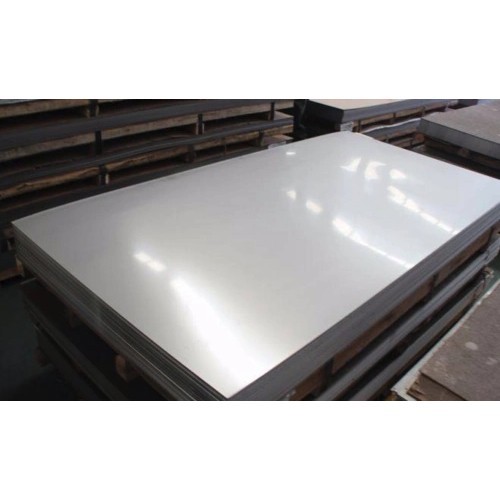
Another product in our portfolio is the SKH51 Steel Plate. SKH51 steel is a high - speed tool steel with good toughness and heat resistance, making it suitable for a variety of industrial applications.
Contact Us for Procurement
If you are in the market for high - quality hot rolled steel sheets or any of our related products, we encourage you to contact us for procurement. Our team of experts is ready to assist you in selecting the right steel sheets based on your specific requirements, including the desired yield strength. We can also provide detailed technical information and support to ensure that you make an informed decision. Whether you need a small quantity for a prototype or a large volume for a major project, we have the capacity to meet your needs.
References
- ASM Handbook Committee. (2005). ASM Handbook Volume 1: Properties and Selection: Irons, Steels, and High - Performance Alloys. ASM International.
- Callister, W. D., & Rethwisch, D. G. (2012). Materials Science and Engineering: An Introduction. Wiley.
- ASTM International. (2019). ASTM A370 - 19: Standard Test Methods and Definitions for Mechanical Testing of Steel Products.


