

What is the surface roughness of hot rolled steel sheets?
As a supplier of Hot Rolled Steel Sheets, I often encounter inquiries from customers about the surface roughness of these products. Surface roughness is a crucial characteristic that can significantly impact the performance, appearance, and applications of hot rolled steel sheets. In this blog post, I'll delve into what surface roughness is, how it affects hot rolled steel sheets, and why it matters to our customers.
Understanding Surface Roughness
Surface roughness refers to the irregularities on the surface of a material. These irregularities can be microscopic deviations from a perfectly flat or smooth surface. In the context of hot rolled steel sheets, surface roughness is a result of the manufacturing process. During hot rolling, the steel is heated to a high temperature and passed through a series of rollers to achieve the desired thickness and shape. The interaction between the steel and the rollers, as well as other factors such as the condition of the rollers and the presence of scale, can lead to variations in the surface texture.
Surface roughness is typically measured using parameters such as Ra (arithmetical mean deviation of the roughness profile), Rz (average maximum height of the roughness profile), and Rq (root mean square deviation of the roughness profile). Each of these parameters provides a different way of quantifying the surface irregularities. For example, Ra represents the average deviation of the surface profile from the mean line, while Rz measures the average height difference between the highest peaks and the lowest valleys in a specified sampling length.
Factors Affecting the Surface Roughness of Hot Rolled Steel Sheets
Several factors can influence the surface roughness of hot rolled steel sheets. One of the primary factors is the condition of the rolling mill rolls. Over time, the rolls can wear out, which can lead to an increase in surface roughness. The quality of the lubrication used during the rolling process also plays a role. Proper lubrication can reduce friction between the steel and the rolls, resulting in a smoother surface finish.
The composition of the steel itself can affect surface roughness. Different steel grades have different properties, and some grades may be more prone to developing surface irregularities during the rolling process. Additionally, the presence of impurities or inclusions in the steel can also contribute to surface roughness.

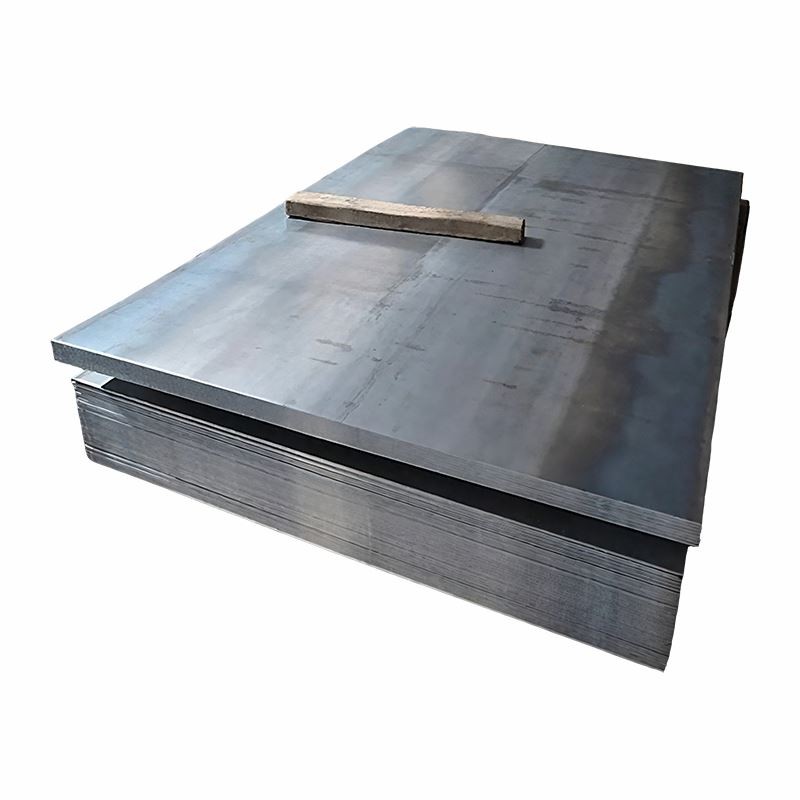
The temperature at which the hot rolling process takes place is another important factor. If the temperature is too low, the steel may not deform uniformly, leading to a rougher surface. On the other hand, if the temperature is too high, the steel may form a thicker scale layer, which can also affect the surface finish.
Impact of Surface Roughness on Hot Rolled Steel Sheets
Surface roughness can have several implications for hot rolled steel sheets. From a functional perspective, a rougher surface can increase friction, which may be beneficial in some applications where grip or traction is required. For example, in the construction industry, hot rolled steel sheets with a certain level of surface roughness may be used for flooring or walkways to prevent slipping.
However, in other applications, a smooth surface finish is preferred. For instance, in the automotive industry, hot rolled steel sheets are often used for body panels. A smooth surface is essential for achieving a high - quality paint finish and for ensuring proper fit and assembly of the components.
Surface roughness can also affect the corrosion resistance of hot rolled steel sheets. A rough surface provides more surface area for corrosion to occur, as it can trap moisture and other corrosive agents. Therefore, in applications where corrosion resistance is a concern, a smoother surface finish may be desirable.
Controlling and Measuring Surface Roughness
As a supplier of Hot Rolled Steel Sheets, we take measures to control and monitor the surface roughness of our products. We ensure that our rolling mill rolls are regularly maintained and replaced when necessary to minimize wear and tear. We also optimize the lubrication process to achieve the best possible surface finish.
To measure the surface roughness of our hot rolled steel sheets, we use advanced measuring equipment such as profilometers. These devices can accurately measure the surface profile and provide detailed information about the surface roughness parameters. By regularly measuring and monitoring the surface roughness, we can ensure that our products meet the required quality standards.
Applications of Hot Rolled Steel Sheets with Different Surface Roughness
Hot rolled steel sheets with different surface roughness levels are suitable for a wide range of applications. For applications where a rough surface is acceptable or even desirable, such as in the manufacturing of structural components, machinery parts, and agricultural equipment, our hot rolled steel sheets with a relatively high surface roughness can be a cost - effective solution.
On the other hand, for applications that require a smooth surface finish, such as in the production of electrical appliances, furniture, and some automotive parts, we offer hot rolled steel sheets with a lower surface roughness. These sheets can be further processed, such as by cold rolling or polishing, to achieve an even smoother surface.
In addition to Hot Rolled Steel Sheets, we also supply other types of steel products, such as SKH51 Steel Plate and High Speed Steel Plate. These products have their own unique characteristics and applications, and surface roughness may also play a role in their performance.
Why Surface Roughness Matters to Our Customers
Understanding the surface roughness of hot rolled steel sheets is essential for our customers. It allows them to select the right product for their specific applications. By knowing the surface roughness requirements of their projects, customers can ensure that the hot rolled steel sheets they purchase will perform as expected.
For customers who are involved in secondary processing, such as painting, coating, or welding, surface roughness can have a significant impact on the quality of the final product. A smooth surface can improve the adhesion of paints and coatings, while a rough surface may require additional surface preparation steps.
In conclusion, surface roughness is an important aspect of hot rolled steel sheets. It is influenced by various factors during the manufacturing process and can have a significant impact on the performance, appearance, and applications of the products. As a supplier, we are committed to providing high - quality hot rolled steel sheets with the appropriate surface roughness to meet the diverse needs of our customers.
If you are interested in our Hot Rolled Steel Sheets, SKH51 Steel Plate, or High Speed Steel Plate, please feel free to contact us for more information and to start a procurement discussion. We look forward to working with you to find the best steel solutions for your projects.
References
- Metals Handbook: Properties and Selection: Irons and Steels. ASM International.
- Introduction to Manufacturing Processes. Serope Kalpakjian and Steven R. Schmid. Pearson Education.
- Surface Engineering for Corrosion and Wear Resistance. William G. Totten and M. Inoue. Elsevier.


