

What is the magnetic property of HSS Straight Strips?
As a supplier of HSS Straight Strips, I've often been asked about the magnetic properties of these high - speed steel products. High - speed steel (HSS) is a well - known material in the manufacturing and machining industries, valued for its ability to maintain hardness at high temperatures, excellent wear resistance, and high cutting speeds. But what about its magnetic characteristics?
Understanding the Basics of Magnetism in Metals
Before delving into the magnetic properties of HSS Straight Strips, it's essential to understand the basics of magnetism in metals. There are three main types of magnetic behavior in materials: ferromagnetic, paramagnetic, and diamagnetic.
Ferromagnetic materials are strongly attracted to magnetic fields and can retain their magnetization even after the external magnetic field is removed. Examples of ferromagnetic metals include iron, nickel, and cobalt. Paramagnetic materials are weakly attracted to magnetic fields, and their magnetization is proportional to the applied magnetic field. Diamagnetic materials, on the other hand, are weakly repelled by magnetic fields.
Magnetic Properties of HSS Straight Strips
HSS Straight Strips are typically ferromagnetic. This is mainly due to the high iron content in high - speed steel. Iron is a well - known ferromagnetic element, and when it forms the base of the HSS alloy, it imparts ferromagnetic properties to the material.
The ferromagnetic nature of HSS Straight Strips means that they can be easily magnetized when exposed to an external magnetic field. Once magnetized, they can attract other ferromagnetic materials, such as iron filings or small steel objects. This property can be both an advantage and a disadvantage in different applications.
Advantages in Applications
In the manufacturing process, the ferromagnetic property of HSS Straight Strips can be utilized for easy handling and positioning. For example, in automated machining operations, magnetic fixtures can be used to hold the HSS Straight Strips firmly in place. This ensures precise machining and reduces the risk of the strips moving during the cutting or shaping process.
In addition, the magnetic property can also be used for sorting and separating HSS Straight Strips from other non - magnetic materials. Magnetic separators can quickly and efficiently separate HSS products from a mixture of different metals, which is particularly useful in recycling and scrap metal processing.
Disadvantages in Applications
However, the ferromagnetic property can also cause some problems. In some high - precision applications, the magnetic field generated by the HSS Straight Strips can interfere with sensitive electronic components. For instance, in the production of electronic devices, the magnetic field of the HSS tooling can affect the performance of magnetic sensors or other magnetic - sensitive parts.
Factors Affecting the Magnetic Properties of HSS Straight Strips
The magnetic properties of HSS Straight Strips are not only determined by the iron content but also affected by other factors, such as the alloying elements and the heat treatment process.
Alloying Elements
HSS is an alloy that contains various elements in addition to iron, such as chromium, vanadium, tungsten, and molybdenum. These alloying elements can modify the magnetic properties of the HSS. For example, chromium can increase the corrosion resistance of HSS but may also reduce its magnetic susceptibility to some extent. Vanadium and tungsten can improve the hardness and wear resistance of HSS, and their presence can also have an impact on the magnetic domain structure of the material.
Heat Treatment
Heat treatment is a crucial process in the production of HSS Straight Strips. Different heat treatment methods, such as annealing, quenching, and tempering, can change the microstructure of the HSS, thereby affecting its magnetic properties. For example, quenching can produce a martensitic structure in HSS, which may have different magnetic characteristics compared to the annealed structure. Tempering after quenching can further adjust the magnetic properties by relieving internal stresses and changing the precipitation of alloy carbides.
Comparison with Other Steel Products
When comparing the magnetic properties of HSS Straight Strips with other steel products, such as HSS BAR and Hot Rolled COIL, there are some similarities and differences.

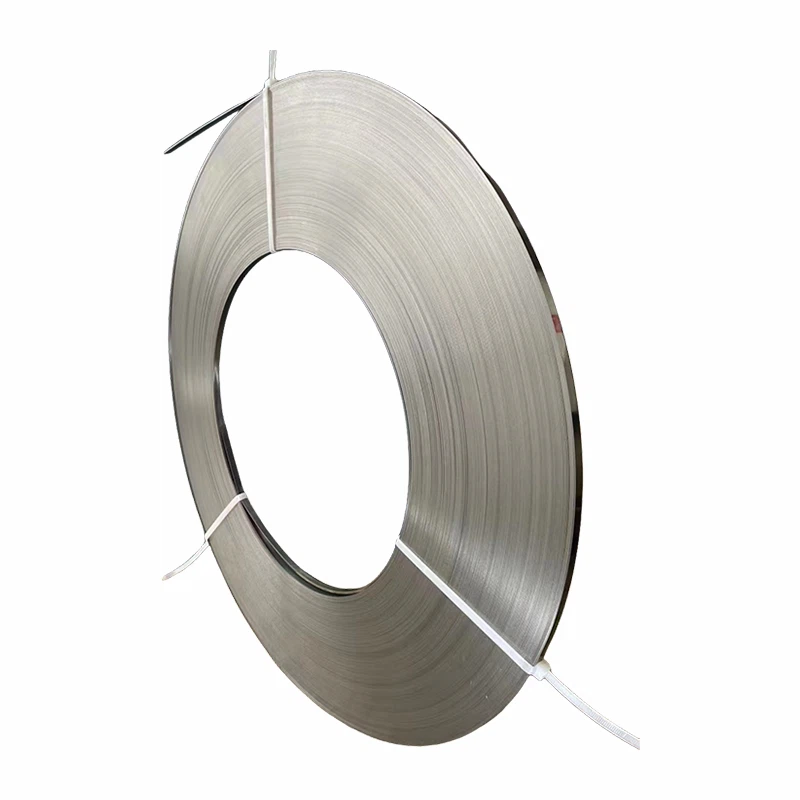
Both HSS Straight Strips and HSS BAR are made of high - speed steel, so they generally have similar ferromagnetic properties. However, the shape and size of the products may affect the distribution of the magnetic field. For example, a thicker HSS BAR may have a stronger magnetic field at its core compared to a thinner HSS Straight Strip.
Hot Rolled COIL is usually made of carbon steel or low - alloy steel. While it is also ferromagnetic, the magnetic properties can be different from HSS Straight Strips due to the differences in alloy composition and manufacturing process. Hot - rolled coils may have a more uniform magnetic field distribution because of their continuous and large - scale production process.
Special Applications Utilizing Magnetic Properties
In some special applications, the magnetic properties of HSS Straight Strips are deliberately exploited. For example, in the production of HSS STEEL VANE, the ferromagnetic property can be used to ensure proper alignment during assembly. The magnetic attraction between the HSS steel vanes and other ferromagnetic components can help in achieving accurate positioning and a more stable structure.
Conclusion
In conclusion, the magnetic property of HSS Straight Strips is mainly ferromagnetic, which is mainly due to the high iron content in high - speed steel. This property has both advantages and disadvantages in different applications, and it can be affected by alloying elements and heat treatment. Understanding the magnetic properties of HSS Straight Strips is crucial for manufacturers, engineers, and users to make the most of these products and avoid potential problems.
If you are interested in our HSS Straight Strips or have any questions regarding their magnetic properties or other aspects, please feel free to contact us for further discussion and potential procurement. We are always ready to provide you with high - quality products and professional technical support.
References
- ASM Handbook Volume 1: Properties and Selection: Irons, Steels, and High - Performance Alloys. ASM International.
- Callister, W. D., & Rethwisch, D. G. (2011). Materials Science and Engineering: An Introduction. Wiley.


