

Hey there! As a supplier of M42 High Speed Steel Sheet, I often get asked about its fatigue resistance. So, I thought I'd take a deep dive into this topic and share some insights with you.
First off, let's understand what fatigue resistance means. In simple terms, fatigue resistance is the ability of a material to withstand repeated loading and unloading without failing. When a material is subjected to cyclic stresses, tiny cracks can start to form and grow over time. Eventually, these cracks can lead to catastrophic failure. A material with high fatigue resistance can endure a large number of stress cycles before failing.
Now, let's talk about M42 High Speed Steel Sheet. M42 is a high - cobalt high - speed steel that's known for its excellent combination of hardness, wear resistance, and toughness. These properties also play a crucial role in its fatigue resistance.
One of the key factors contributing to the fatigue resistance of M42 High Speed Steel Sheet is its chemical composition. It typically contains around 1.05 - 1.15% carbon, 3.75 - 4.50% chromium, 9.00 - 10.00% molybdenum, 1.15 - 1.85% vanadium, and 7.50 - 8.50% cobalt. The high cobalt content in M42 helps to maintain its hardness at elevated temperatures. This is important because during cyclic loading, the temperature of the material can increase due to friction and deformation. By keeping its hardness, M42 can better resist the formation and propagation of cracks.
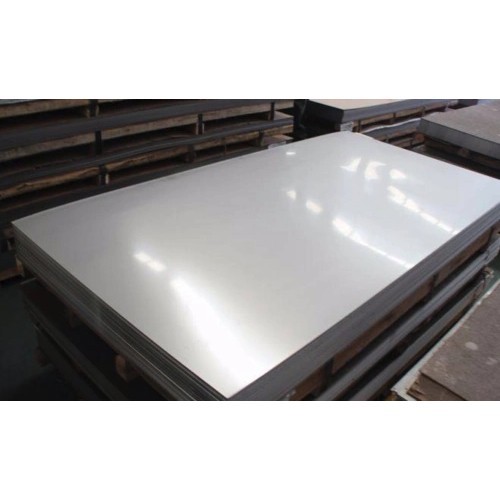
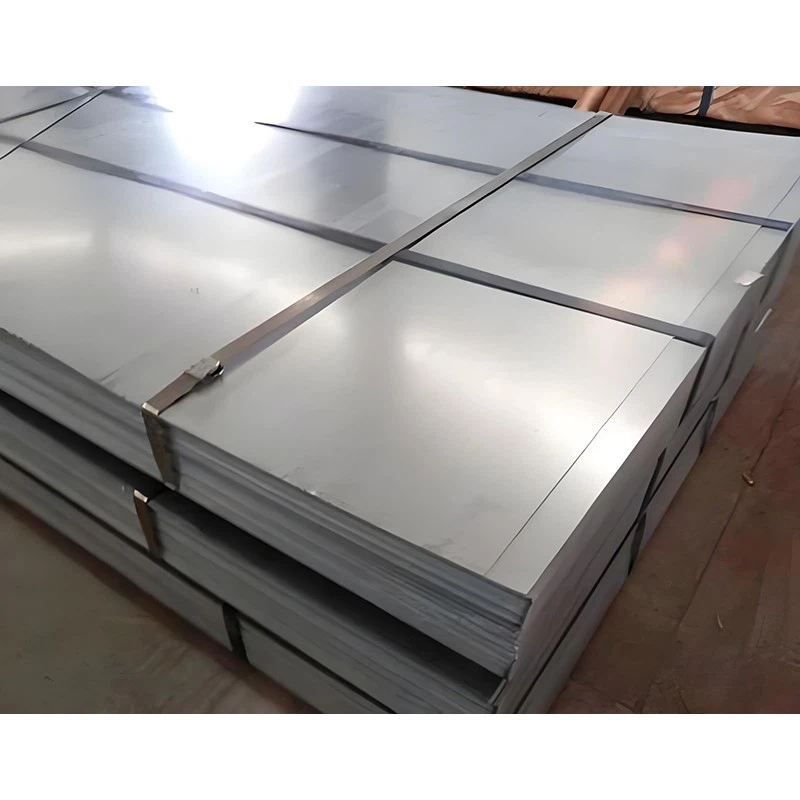
The chromium in M42 forms a protective oxide layer on the surface of the steel sheet. This oxide layer acts as a barrier, preventing oxygen and other corrosive agents from reaching the underlying metal. Corrosion can significantly reduce the fatigue life of a material by creating stress concentrations at the corrosion sites. So, the presence of chromium helps to enhance the fatigue resistance of M42.
Molybdenum and vanadium contribute to the formation of carbides in the steel. These carbides are hard particles that strengthen the steel matrix. They can impede the movement of dislocations (defects in the crystal structure of the metal) during cyclic loading. As a result, the material is better able to resist deformation and crack initiation, leading to improved fatigue resistance.
Another aspect that affects the fatigue resistance of M42 High Speed Steel Sheet is its microstructure. A fine - grained microstructure generally provides better fatigue properties compared to a coarse - grained one. During the manufacturing process of M42 steel sheets, proper heat treatment can be used to control the grain size. For example, processes like quenching and tempering can refine the grain structure, which in turn enhances the fatigue resistance.
In practical applications, the fatigue resistance of M42 High Speed Steel Sheet is highly beneficial. It's commonly used in cutting tools such as drills, end mills, and taps. These tools are subjected to high - frequency cyclic loading during the machining process. Thanks to its good fatigue resistance, M42 tools can last longer and maintain their cutting performance over a large number of machining cycles.
M42 is also used in the production of dies and molds. In die - casting and forging operations, the dies are exposed to repeated thermal and mechanical stresses. The high fatigue resistance of M42 ensures that the dies can withstand these cyclic loads without premature failure, reducing production costs and downtime.
When comparing M42 with other types of steel sheets, it stands out in terms of fatigue resistance. For instance, if you look at High Speed Steel Plate, while it also has good fatigue properties, M42's high cobalt content gives it an edge, especially in high - temperature applications. SKH51 Steel Plate is another popular option, but M42 generally offers better fatigue resistance due to its unique chemical composition and microstructure. And when compared to Special Steel Sheet, M42's specific alloying elements make it more suitable for applications where high - cycle fatigue is a concern.
However, it's important to note that the fatigue resistance of M42 High Speed Steel Sheet can be affected by external factors as well. The surface finish of the sheet plays a role. A smooth surface finish can reduce stress concentrations and improve fatigue life. On the other hand, rough surfaces or surface defects can act as crack initiation sites.
The loading conditions also matter. The amplitude and frequency of the cyclic stress, as well as the mean stress level, all influence the fatigue behavior of M42. For example, a higher stress amplitude will generally lead to a shorter fatigue life.
If you're in the market for a steel sheet with excellent fatigue resistance, M42 High Speed Steel Sheet is definitely worth considering. Whether you're in the manufacturing industry, automotive sector, or any other field that requires high - performance cutting tools or durable dies and molds, M42 can meet your needs.
I'm here to help you with all your M42 High Speed Steel Sheet requirements. If you have any questions about its fatigue resistance, applications, or pricing, don't hesitate to reach out. We can have a detailed discussion and find the best solution for your specific project. Contact me to start the procurement process and let's work together to get you the high - quality M42 steel sheets you need.
References
- ASM Handbook Volume 1: Properties and Selection: Irons, Steels, and High - Performance Alloys
- Metals Handbook Desk Edition, Third Edition


