

Hey there! As a supplier of Hot Rolled Steel Sheets, I often get asked about the difference in production processes between hot rolled and cold rolled steel sheets. So, I thought I'd take a moment to break it down for you in a way that's easy to understand.
Let's start with hot rolled steel sheets. The production process of hot rolled steel begins with heating a large piece of steel, usually a billet or slab, to extremely high temperatures - around 1700°F (about 927°C). This high temperature makes the steel malleable, like soft clay. Once it reaches the right temperature, the heated steel is passed through a series of rollers. These rollers press and shape the steel into the desired thickness and width.
The hot rolling process is fast and efficient. It can produce large quantities of steel sheets in a relatively short time. The high temperature also helps to relieve internal stresses in the steel, making it more ductile. That means it can be bent and formed into different shapes without cracking. However, because the steel is hot during the rolling process, it contracts as it cools. This can lead to some variation in the dimensions of the final product. The surface of hot rolled steel sheets also tends to be rougher, with a characteristic scale or oxide layer on it.
Now, let's talk about cold rolled steel sheets. The production of cold rolled steel actually often starts with hot rolled steel. After the initial hot rolling, the steel is further processed at room temperature. First, the hot rolled steel is pickled to remove the scale and oxide layer on its surface. This gives the steel a clean and smooth starting point.
Then, the pickled steel is passed through a series of cold rolling mills. These mills apply high pressure to the steel, reducing its thickness and improving its surface finish. Cold rolling can produce steel sheets with very precise dimensions and a smooth, shiny surface. The cold working process also increases the strength and hardness of the steel. The grains in the steel are compressed and aligned, which gives it better mechanical properties.

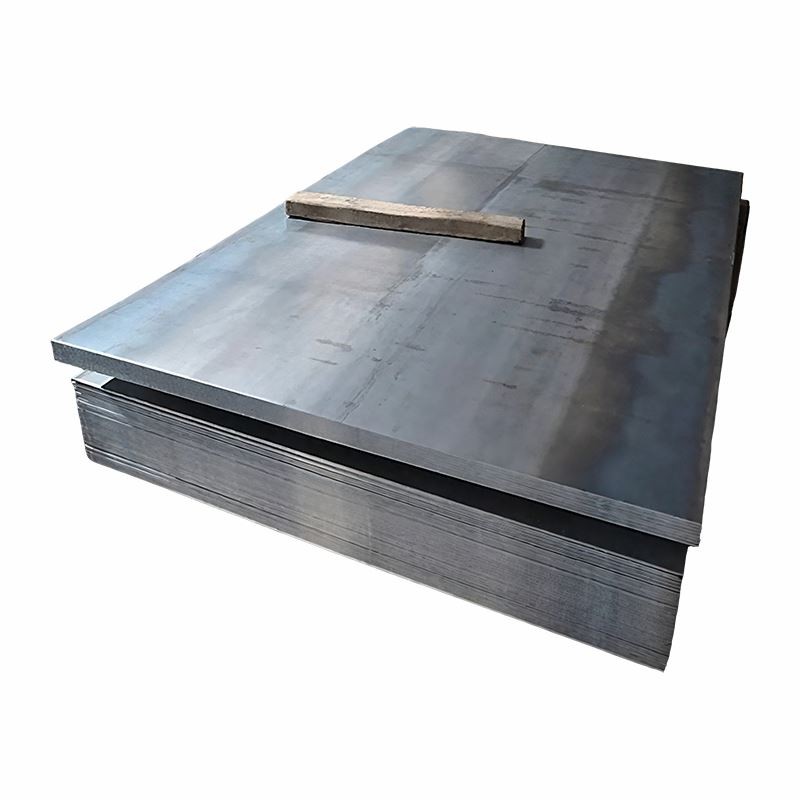
One of the main differences between hot rolled and cold rolled steel sheets is the cost. Hot rolled steel is generally cheaper to produce because the process is simpler and faster. It's a great choice for applications where precise dimensions and a smooth surface aren't critical, like in construction for structural beams and columns. Cold rolled steel, on the other hand, is more expensive due to the additional processing steps. But it's worth it for applications where high precision and a good surface finish are required, such as in the automotive industry for body panels or in the manufacturing of appliances.
Another difference is in their appearance. As I mentioned earlier, hot rolled steel has a rough, scaly surface, while cold rolled steel has a smooth and shiny finish. This can also affect their corrosion resistance. The scale on hot rolled steel can trap moisture, which can lead to rusting if not properly protected. Cold rolled steel, with its smooth surface, is less likely to trap moisture, but it still needs to be protected from corrosion.
Let's look at some real - world applications to see how these differences play out. For example, if you're building a simple storage shed, hot rolled steel sheets would be a great choice. They're strong enough to support the structure, and the rough surface won't be a problem. On the other hand, if you're making a high - end kitchen appliance, cold rolled steel would be more suitable. Its smooth surface looks better and can be easily painted or coated.
Now, if you're in the market for high - quality steel products, besides Hot Rolled Steel Sheets, we also offer SKH51 Steel Plate and M2 High Speed Steel Plate. These specialty steel plates are known for their excellent performance in various industrial applications.
SKH51 steel plate is a high - speed tool steel. It has high hardness, good wear resistance, and excellent red hardness. That means it can maintain its hardness even at high temperatures, making it ideal for cutting tools, dies, and molds. M2 high - speed steel plate is also a popular choice for cutting tools. It has a good combination of toughness and wear resistance, and it can be heat - treated to achieve different levels of hardness.
Whether you need hot rolled steel sheets for a large - scale construction project or specialty steel plates for precision manufacturing, we've got you covered. We pride ourselves on providing top - quality products at competitive prices. If you're interested in learning more about our products or have any questions about the production process or applications, don't hesitate to reach out. We're here to help you make the right choice for your project.
In conclusion, understanding the difference in the production processes between hot rolled and cold rolled steel sheets is crucial for choosing the right material for your needs. Each type has its own unique properties and advantages, and by knowing these, you can make an informed decision that will save you time and money in the long run. So, if you're thinking about a steel purchase, give us a shout, and let's start a conversation about how we can meet your requirements.
References
- "The Basics of Steel Manufacturing" by American Iron and Steel Institute
- "Steel Production Processes" in Metallurgy and Materials Science textbooks


