

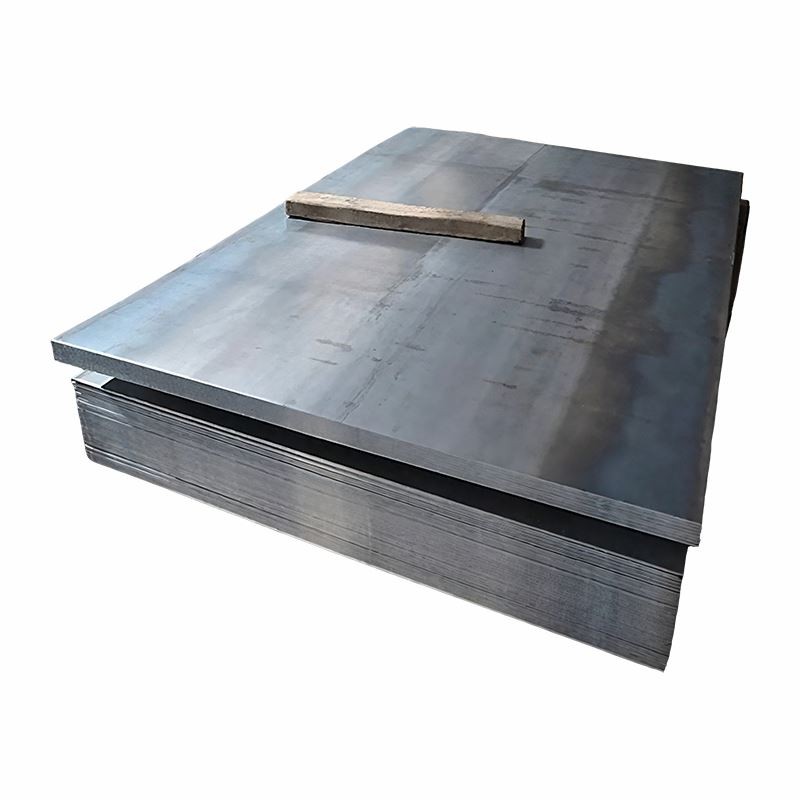
Cold rolled steel sheets are a staple in numerous industries due to their superior surface finish, tight dimensional tolerances, and enhanced mechanical properties compared to their hot-rolled counterparts. As a leading supplier of Cold Rolled Steel Sheets, I often encounter inquiries about the creep resistance of these materials. In this blog post, I will delve into the concept of creep resistance, its significance in cold rolled steel sheets, and the factors that influence it.
Understanding Creep
Creep is a time-dependent deformation that occurs under a constant load at elevated temperatures. Unlike elastic deformation, which is instantaneous and reversible, creep deformation is permanent and accumulates over time. This phenomenon is particularly important in applications where materials are subjected to long-term stress at high temperatures, such as in power generation, aerospace, and automotive industries.
The creep process can be divided into three stages: primary, secondary, and tertiary. In the primary stage, the creep rate decreases with time as the material undergoes work hardening. The secondary stage, also known as the steady-state creep, is characterized by a constant creep rate. This stage typically accounts for the majority of the total creep life of the material. Finally, in the tertiary stage, the creep rate increases rapidly until failure occurs due to necking, cracking, or other forms of damage.
Creep Resistance in Cold Rolled Steel Sheets
Cold rolled steel sheets are known for their excellent strength and ductility, but their creep resistance can vary depending on several factors. The chemical composition of the steel, the manufacturing process, and the operating conditions all play a crucial role in determining the creep behavior of cold rolled steel sheets.
Chemical Composition
The chemical composition of cold rolled steel sheets significantly affects their creep resistance. Alloying elements such as chromium (Cr), molybdenum (Mo), vanadium (V), and nickel (Ni) are commonly added to steel to improve its creep properties. These elements form carbides and other precipitates that impede the movement of dislocations, thereby increasing the strength and creep resistance of the steel.
For example, M2 High Speed Steel Plate contains high levels of tungsten (W), molybdenum, and vanadium, which contribute to its excellent creep resistance at elevated temperatures. These alloying elements form stable carbides that prevent grain growth and enhance the strength of the steel matrix.
Manufacturing Process
The manufacturing process of cold rolled steel sheets also influences their creep resistance. Cold rolling involves passing the steel through a series of rollers at room temperature to reduce its thickness and improve its surface finish. This process induces work hardening, which increases the strength of the steel but can also reduce its ductility.
In addition to cold rolling, heat treatment processes such as annealing, normalizing, and tempering can be used to optimize the microstructure and mechanical properties of cold rolled steel sheets. Annealing, for example, can relieve internal stresses and improve the ductility of the steel, while tempering can enhance its toughness and creep resistance.
Operating Conditions
The operating conditions, including temperature, stress level, and time, have a significant impact on the creep behavior of cold rolled steel sheets. As the temperature increases, the creep rate also increases, and the material becomes more susceptible to creep deformation. Similarly, higher stress levels and longer exposure times can accelerate the creep process and reduce the creep life of the material.
It is important to note that the creep resistance of cold rolled steel sheets is not infinite, and there is a critical temperature and stress level beyond which the material will experience significant creep deformation. Therefore, it is essential to select the appropriate grade of cold rolled steel sheets based on the specific operating conditions of the application.
Applications of Cold Rolled Steel Sheets with High Creep Resistance
Cold rolled steel sheets with high creep resistance are used in a wide range of applications where long-term stability and reliability are required. Some common applications include:
Power Generation
In power generation plants, cold rolled steel sheets are used in the construction of boilers, steam turbines, and other high-temperature components. These components are subjected to high temperatures and pressures for extended periods, making creep resistance a critical property. Cold rolled steel sheets with high creep resistance can withstand these harsh conditions and ensure the efficient and reliable operation of power generation equipment.
Aerospace
The aerospace industry requires materials that can withstand high temperatures and stresses during flight. Cold rolled steel sheets with high creep resistance are used in the manufacturing of aircraft engines, landing gear, and other critical components. These materials provide the necessary strength and durability to ensure the safety and performance of aircraft.
Automotive
In the automotive industry, cold rolled steel sheets are used in the production of engine components, exhaust systems, and other parts that are exposed to high temperatures. Cold rolled steel sheets with high creep resistance can improve the reliability and longevity of these components, reducing maintenance costs and enhancing the overall performance of vehicles.

Conclusion
Creep resistance is an important property of cold rolled steel sheets, especially in applications where materials are subjected to long-term stress at elevated temperatures. The chemical composition, manufacturing process, and operating conditions all influence the creep behavior of cold rolled steel sheets. By understanding these factors and selecting the appropriate grade of cold rolled steel sheets, engineers and designers can ensure the reliability and performance of their products.
As a supplier of Cold Rolled Steel Sheets, I am committed to providing high-quality materials that meet the specific requirements of our customers. If you have any questions or need assistance in selecting the right cold rolled steel sheets for your application, please do not hesitate to contact us. We look forward to discussing your needs and providing you with the best solutions.
References
- ASM Handbook, Volume 1: Properties and Selection: Irons, Steels, and High-Performance Alloys, ASM International, 1990.
- Metals Handbook: Properties and Selection: Irons, Steels, and High-Performance Alloys, 9th Edition, American Society for Metals, 1985.
- "Creep of Metals and Alloys," by B. Wilshire and R. W. Evans, Institute of Materials, 1993.


