

Toughness is a critical mechanical property that measures a material's ability to absorb energy and deform plastically before fracturing. In the context of special shaped steel, toughness plays a pivotal role in determining its performance under impact situations. As a supplier of special shaped steel, I have witnessed firsthand how the toughness of these materials can significantly influence their suitability for various applications.
Understanding Toughness in Special Shaped Steel
Toughness is closely related to a material's ability to resist crack initiation and propagation. A tough material can absorb a large amount of energy during deformation, which is particularly important in impact situations where sudden and high - energy loads are applied. Special shaped steel, which is designed for specific applications, often needs to withstand such impact forces.
The toughness of special shaped steel is affected by several factors. One of the primary factors is the chemical composition. Alloying elements such as nickel, chromium, and molybdenum can enhance the toughness of steel. Nickel, for example, improves the ductility and toughness of steel by reducing the transition temperature at which the steel becomes brittle. Chromium and molybdenum can form carbides that strengthen the steel matrix while maintaining good toughness.
The microstructure of the steel also has a profound impact on its toughness. Fine - grained microstructures generally exhibit higher toughness compared to coarse - grained ones. This is because fine grains provide more grain boundaries, which act as barriers to crack propagation. Heat treatment processes, such as quenching and tempering, can be used to control the microstructure of special shaped steel and improve its toughness.
Impact Performance and Toughness
In impact situations, the toughness of special shaped steel determines how well it can withstand sudden loads without fracturing. When an impact load is applied, the steel undergoes deformation. A tough steel will deform plastically, absorbing the energy of the impact. This plastic deformation can prevent the formation and propagation of cracks, which could otherwise lead to catastrophic failure.
For example, in automotive applications, special shaped steel is used in components such as bumpers and chassis parts. These parts need to be able to absorb the energy of a collision to protect the passengers. A steel with high toughness will deform in a controlled manner during an impact, dissipating the energy and reducing the force transmitted to the vehicle's interior.
In construction, special shaped steel is used in structures that may be subjected to dynamic loads, such as earthquakes or wind gusts. High - toughness steel can help these structures withstand the sudden forces generated during these events. It can prevent the rapid propagation of cracks, ensuring the structural integrity of the building.
Case Studies: Real - World Applications
Let's take a look at some real - world applications to understand the importance of toughness in special shaped steel.
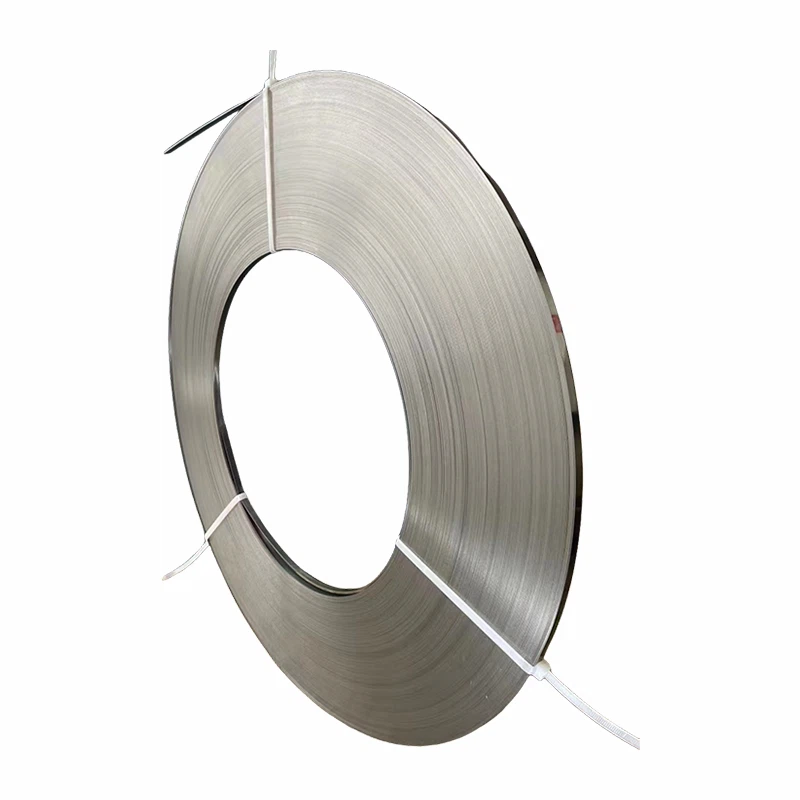

Automotive Industry: In modern cars, the use of high - strength, high - toughness special shaped steel has become increasingly common. For instance, advanced high - strength steels (AHSS) are used in the body - in - white construction. These steels have a combination of high strength and good toughness, which allows them to absorb energy during a crash while maintaining the structural integrity of the vehicle. Our Precision Special Steel Strip is often used in automotive components where precise dimensions and high toughness are required.
Metal Cutting Tools: Special shaped steel is also widely used in the manufacturing of metal cutting tools. HSS Straight Strips for Metal Cutting need to be tough enough to withstand the high - speed impacts and forces generated during the cutting process. High - speed steel (HSS) with good toughness can resist chipping and breakage, ensuring a longer tool life and better cutting performance.
Construction Industry: In large - scale construction projects, such as bridges and high - rise buildings, special shaped steel is used to provide structural support. Hot Rolled COIL is often used in the construction of steel frames. High - toughness steel coils can withstand the dynamic loads caused by environmental factors and human activities. They can prevent the sudden failure of the structure, ensuring the safety of the occupants.
Testing and Quality Control
As a special shaped steel supplier, we place great emphasis on testing and quality control to ensure that our products meet the required toughness standards. We use a variety of testing methods, including Charpy impact testing and Izod impact testing. These tests measure the energy absorbed by the steel specimen during impact, providing a quantitative measure of its toughness.
In addition to impact testing, we also conduct microstructural analysis and chemical composition analysis. Microstructural analysis helps us ensure that the steel has the desired fine - grained structure, which is associated with high toughness. Chemical composition analysis allows us to verify the presence and concentration of alloying elements that contribute to toughness.
Conclusion and Call to Action
The toughness of special shaped steel is a crucial factor that affects its performance in impact situations. Whether it is in automotive, construction, or metal cutting applications, high - toughness steel can provide better safety, longer service life, and improved performance.
As a leading supplier of special shaped steel, we are committed to providing high - quality products with excellent toughness. Our team of experts is constantly researching and developing new steel grades to meet the evolving needs of our customers.
If you are in the market for special shaped steel for applications that require high toughness, we invite you to contact us for a detailed discussion. Our technical team can provide you with in - depth information about our products and help you select the most suitable steel for your specific requirements. Let's work together to find the best special shaped steel solutions for your projects.
References
- ASM Handbook Committee. (2005). ASM Handbook Volume 1: Properties and Selection: Irons, Steels, and High - Performance Alloys. ASM International.
- Dieter, G. E. (1986). Mechanical Metallurgy. McGraw - Hill.
- Kalpakjian, S., & Schmid, S. R. (2009). Manufacturing Engineering and Technology. Pearson Prentice Hall.


