Steel is one of the most widely used materials in the world, with applications ranging from construction and automotive to manufacturing and infrastructure. As a steel supplier, I have witnessed firsthand the diverse manufacturing processes that transform raw materials into high - quality steel products. In this blog, I will explore the different manufacturing processes for steel products, shedding light on the unique characteristics and applications of each method.
1. Ironmaking: The First Step in Steel Production
The journey of steel manufacturing begins with ironmaking. The primary raw material for steel production is iron ore, which is typically mined from the earth. Other essential materials include coke (produced from coal) and limestone. The main process used in ironmaking is the blast furnace method.
In a blast furnace, iron ore, coke, and limestone are continuously fed into the top of the furnace. Hot air is blown into the bottom of the furnace, causing the coke to burn and produce carbon monoxide. The carbon monoxide then reacts with the iron ore, reducing it to molten iron. The limestone acts as a flux, combining with impurities in the ore to form slag, which floats on top of the molten iron and can be easily separated.
The molten iron produced in the blast furnace, known as pig iron, contains a relatively high percentage of carbon (around 3 - 4%) and other impurities. Pig iron is a brittle material and is not suitable for most applications. However, it serves as the starting point for further steelmaking processes.
2. Steelmaking: Refining Pig Iron into Steel
Once pig iron is produced, it needs to be refined to reduce the carbon content and remove other impurities to obtain steel. There are two main methods of steelmaking: the basic oxygen furnace (BOF) process and the electric arc furnace (EAF) process.
Basic Oxygen Furnace (BOF) Process
The BOF process is the most common method for large - scale steel production. In this process, molten pig iron is poured into a large, pear - shaped furnace. High - purity oxygen is then blown into the furnace through a water - cooled lance at supersonic speeds. The oxygen reacts with the carbon, silicon, manganese, and other impurities in the pig iron, oxidizing them and releasing a large amount of heat. This heat raises the temperature of the molten metal, accelerating the chemical reactions.
The oxidation of carbon produces carbon monoxide and carbon dioxide, which escape from the furnace as gases. The other impurities form slag, which can be skimmed off the surface of the molten steel. The entire BOF process takes about 20 - 40 minutes, and it can produce up to 300 tons of steel per heat. The steel produced by the BOF process has a relatively low carbon content (usually less than 1%) and is suitable for a wide range of applications, including structural steel, automotive parts, and pipes.
Electric Arc Furnace (EAF) Process
The EAF process is an alternative method of steelmaking that uses scrap steel as the primary raw material. In an electric arc furnace, large electrodes are lowered into the furnace, and an electric arc is struck between the electrodes and the scrap steel. The intense heat generated by the electric arc melts the scrap steel.

One of the advantages of the EAF process is its flexibility. It can be used to produce a variety of steel grades, and it can be easily adjusted to meet different production requirements. Additionally, the EAF process is more energy - efficient and environmentally friendly compared to the BOF process, as it uses less coal and produces fewer greenhouse gas emissions. However, the quality of the steel produced by the EAF process may be affected by the quality of the scrap steel used.
3. Secondary Steelmaking: Further Refining and Alloying
After the initial steelmaking process, the molten steel often undergoes secondary steelmaking operations to further refine its composition and properties. These operations include ladle metallurgy, vacuum degassing, and alloying.
Ladle Metallurgy
Ladle metallurgy involves transferring the molten steel from the primary steelmaking furnace to a ladle, where it can be treated with various additives and fluxes. This process allows for precise control of the steel's chemical composition, temperature, and cleanliness. For example, desulfurizing agents can be added to reduce the sulfur content in the steel, which can improve its ductility and weldability.
Vacuum Degassing
Vacuum degassing is a process used to remove dissolved gases, such as hydrogen and nitrogen, from the molten steel. The ladle containing the molten steel is placed in a vacuum chamber, and the pressure is reduced. As the pressure decreases, the dissolved gases escape from the steel and are removed from the chamber. This process helps to improve the quality and mechanical properties of the steel, especially in applications where high - strength and low - porosity are required.
Alloying
Alloying is the process of adding other elements to the steel to enhance its properties. Common alloying elements include chromium, nickel, molybdenum, and vanadium. For example, adding chromium to steel can improve its corrosion resistance, making it suitable for use in stainless steel products. The amount and type of alloying elements added depend on the specific requirements of the final steel product.
4. Casting: Shaping the Molten Steel
Once the molten steel has been refined and alloyed, it needs to be shaped into a solid form. There are two main casting methods: ingot casting and continuous casting.
Ingot Casting
In ingot casting, the molten steel is poured into large molds, called ingots. The ingots are then allowed to cool and solidify. After solidification, the ingots are removed from the molds and may undergo further processing, such as rolling or forging, to achieve the desired shape and dimensions. Ingot casting is a traditional method that has been used for many years, but it has some limitations. For example, the cooling rate of the ingots can be uneven, which may result in internal defects and variations in the steel's properties.
Continuous Casting
Continuous casting is a more modern and efficient method of casting steel. In this process, the molten steel is continuously poured into a water - cooled copper mold, which gives the steel its initial shape. As the steel passes through the mold, it begins to solidify. The solidified steel is then pulled out of the mold at a constant speed by a series of rollers. The continuous casting process can produce long, semi - finished products, such as slabs, blooms, and billets, which can be further processed into various steel products.
Continuous casting offers several advantages over ingot casting. It has a higher production rate, better dimensional accuracy, and more uniform properties. Additionally, it reduces the amount of scrap and energy consumption, making it a more cost - effective and environmentally friendly option.
5. Forming and Fabrication: Creating Final Steel Products
After the steel has been cast into semi - finished products, it can be further processed through forming and fabrication operations to create the final steel products. Some common forming and fabrication processes include rolling, forging, extrusion, and machining.
Rolling
Rolling is one of the most widely used forming processes for steel products. In this process, the semi - finished steel products, such as slabs or billets, are passed through a series of rollers to reduce their thickness and increase their length. There are two main types of rolling: hot rolling and cold rolling.
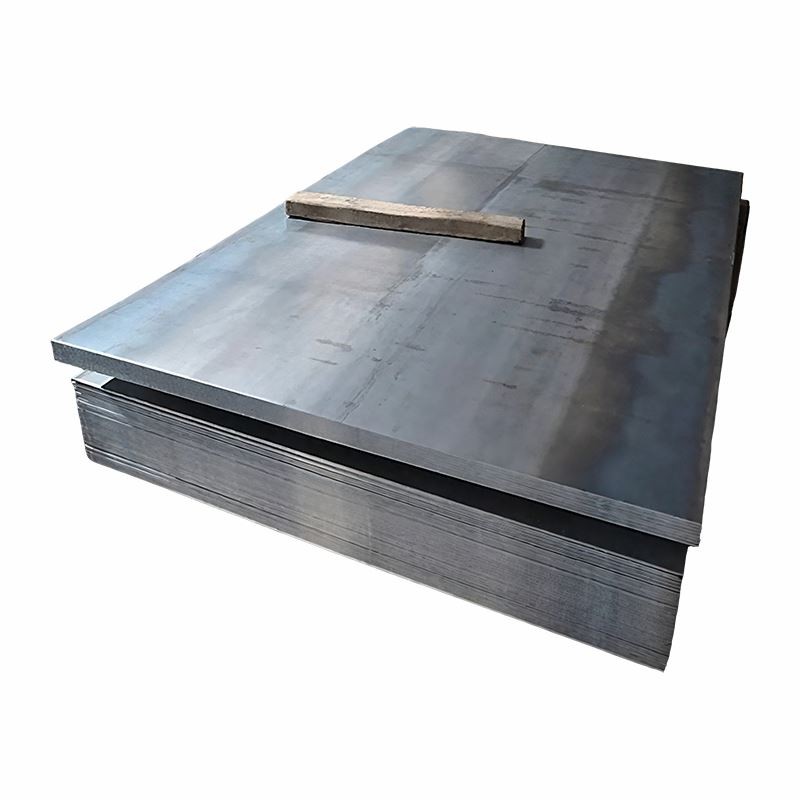
Hot rolling is carried out at high temperatures (above the recrystallization temperature of the steel). During hot rolling, the steel is more malleable, and large reductions in thickness can be achieved. Hot - rolled steel products have a rough surface finish and are commonly used in structural applications, such as beams, columns, and plates. You can explore more about Hot Rolled Steel Sheets.
Cold rolling is performed at room temperature or slightly above. Cold - rolled steel products have a smoother surface finish, better dimensional accuracy, and higher strength compared to hot - rolled products. Cold - rolled steel is often used in applications where a high - quality surface finish is required, such as automotive body panels and household appliances.
Forging
Forging is a process in which the steel is shaped by applying compressive forces using a hammer or a press. Forging can improve the mechanical properties of the steel, such as its strength and toughness, by aligning the grain structure of the metal. Forged steel products are commonly used in applications where high strength and reliability are required, such as automotive crankshafts, aerospace components, and industrial machinery parts.
Extrusion
Extrusion is a process in which the steel is forced through a die to create a continuous profile with a specific cross - section. Extruded steel products can have complex shapes and are used in a variety of applications, such as window frames, door frames, and heat sinks.
Machining
Machining is a process used to remove material from the steel to achieve the desired shape and dimensions. Common machining operations include turning, milling, drilling, and grinding. Machining is often used to produce precision parts with tight tolerances, such as gears, shafts, and valves.
6. Finishing: Enhancing the Appearance and Performance of Steel Products
The final step in the manufacturing process of steel products is finishing. Finishing operations can improve the appearance, corrosion resistance, and performance of the steel products. Some common finishing processes include surface treatment, painting, and coating.
Surface Treatment
Surface treatment involves modifying the surface of the steel to improve its properties. Common surface treatment methods include galvanizing, electroplating, and passivation. Galvanizing is the process of coating the steel with a layer of zinc to protect it from corrosion. Electroplating involves depositing a thin layer of metal, such as nickel or chrome, on the surface of the steel to improve its appearance and corrosion resistance. Passivation is a chemical treatment that forms a protective oxide layer on the surface of the stainless steel, enhancing its corrosion resistance.
Painting and Coating
Painting and coating are used to provide an additional layer of protection and improve the aesthetic appeal of the steel products. Paints and coatings can be applied to the steel surface using various methods, such as spraying, dipping, or brushing. The choice of paint or coating depends on the specific application and the environmental conditions the steel product will be exposed to.
Conclusion
As a steel supplier, I understand the importance of these diverse manufacturing processes in producing high - quality steel products. Each process plays a crucial role in transforming raw materials into steel products with the desired properties and characteristics. Whether you need hot - rolled steel sheets for construction, forged components for machinery, or precision - machined parts for automotive applications, we have the expertise and resources to meet your needs.
If you are interested in purchasing steel products or have any questions about our manufacturing processes, please feel free to contact us for a detailed discussion. We are committed to providing you with the best - quality steel products and excellent customer service.
References
- "The Making, Shaping and Treating of Steel", United States Steel Corporation
- "Steel Metallurgy for the Non - Metallurgist", J. D. Verhoeven
- "Modern Steel Technology", R. I. L. Guthrie