

In the realm of industrial manufacturing, special shaped steel plays a crucial role, offering unique solutions to a wide range of engineering challenges. As a dedicated special shaped steel supplier, I am excited to delve into the common types of special shaped steel that we offer and how they can meet various industrial needs.
1. Linear Guide Rail Substrate
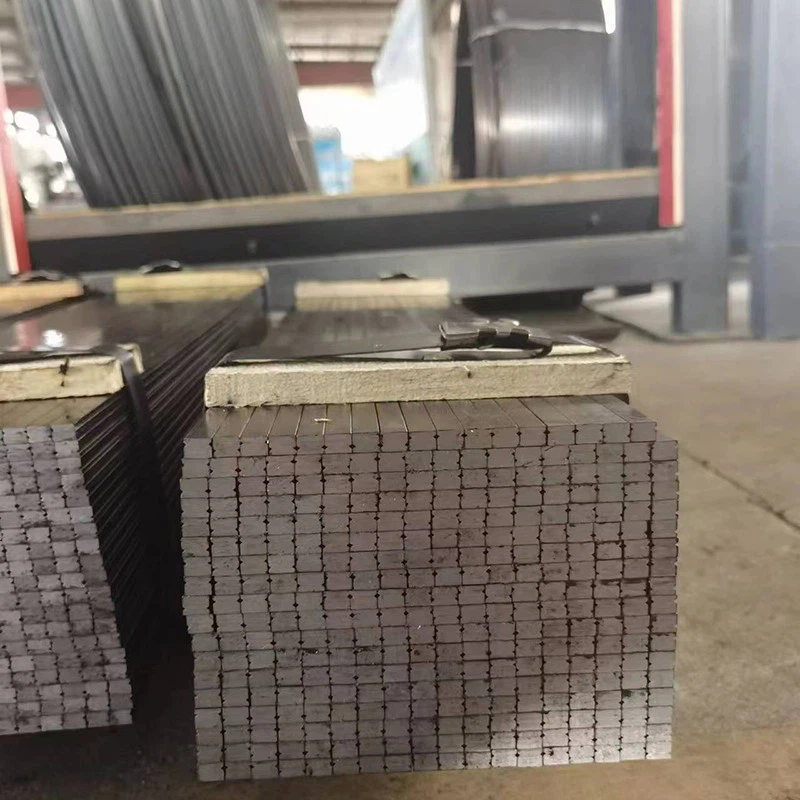
One of the most widely used types of special shaped steel is the Linear Guide Rail Substrate. This type of steel is specifically designed to provide a stable and accurate base for linear guide rails, which are essential components in many precision machinery and automation systems.
The linear guide rail substrate is typically made from high - quality carbon steel or alloy steel, which offers excellent strength, wear resistance, and dimensional stability. Its special shape is carefully engineered to ensure a perfect fit with the linear guide rail, minimizing vibrations and ensuring smooth and precise linear motion.
In the manufacturing process of the linear guide rail substrate, advanced processing techniques such as precision machining and heat treatment are employed. Precision machining guarantees the dimensional accuracy of the substrate, while heat treatment enhances its mechanical properties, such as hardness and toughness. This combination of high - quality materials and advanced manufacturing processes makes the linear guide rail substrate suitable for high - speed and high - precision applications in industries like semiconductor manufacturing, aerospace, and automotive manufacturing.
2. Steel Vanes
Steel Vanes are another common type of special shaped steel. These vanes are often used in pumps, turbines, and other fluid machinery. The design of steel vanes is highly specialized, as they need to efficiently transfer energy between the fluid and the mechanical system.
The shape of steel vanes is carefully optimized to ensure maximum fluid flow efficiency and minimize energy losses. They are usually made from stainless steel or alloy steel, which provides good corrosion resistance and mechanical strength. Steel vanes must be able to withstand high - pressure fluids and high - speed rotations, so their material properties and manufacturing quality are of utmost importance.
In the production of steel vanes, techniques such as casting, forging, and machining are used. Casting is suitable for creating complex vane shapes, while forging can improve the internal structure and mechanical properties of the steel. Machining is then used to achieve the required dimensional accuracy and surface finish. Steel vanes are crucial for the efficient operation of many industrial equipment, especially those in the chemical, power generation, and mining industries.
3. HSS STEEL VANE
HSS STEEL VANE, or High - Speed Steel Vane, is a specialized type of steel vane. High - speed steel is known for its excellent hardness, wear resistance, and high - temperature performance. HSS STEEL VANES are commonly used in high - speed cutting tools, such as milling cutters and drills, as well as in high - performance pumps and compressors.
The high - speed steel used in these vanes contains alloying elements such as tungsten, molybdenum, chromium, and vanadium, which give it its superior properties. These alloying elements form hard carbides during the heat - treatment process, increasing the hardness and wear resistance of the steel. The special shape of HSS STEEL VANES is designed to optimize cutting performance or fluid flow, depending on the application.
Manufacturing HSS STEEL VANES involves a complex process. First, the high - speed steel is melted and cast into ingots. Then, these ingots are forged and rolled to form the desired shape. Precision machining is carried out to achieve the final dimensions and surface finish. Heat treatment is a critical step in the production of HSS STEEL VANES, as it determines the hardness and toughness of the material.
4. Other Common Types of Special Shaped Steel
Angle Steel
Angle steel has an L - shaped cross - section and is widely used in construction, machinery manufacturing, and framework structures. It provides high strength and stability at a relatively low cost. Angle steel can be used for building the frames of buildings, bridges, and industrial equipment. There are different sizes and thicknesses of angle steel available to meet various load - bearing requirements.
Channel Steel
Channel steel has a C - shaped cross - section and is commonly used in the construction and manufacturing industries. It is often used as beams, supports, and tracks. Channel steel's shape allows it to resist bending and shear forces effectively, making it suitable for applications where structural support is needed.
T - Shaped Steel
T - shaped steel has a cross - section that resembles the letter "T". It is used in a variety of applications, such as in the construction of roofs, floors, and partitions. T - shaped steel can provide good load - bearing capacity and is also used in some machinery manufacturing for guiding and supporting components.

Benefits of Special Shaped Steel
The use of special shaped steel offers numerous benefits in industrial applications. Firstly, special shaped steel can be precisely tailored to meet specific engineering requirements. This means that manufacturers can design and produce components that are optimized for their particular applications, resulting in improved performance and efficiency.
Secondly, special shaped steel can reduce the need for additional machining and assembly operations. Since the steel is already in the desired shape, it can be directly used in the manufacturing process, saving time and cost.
Thirdly, special shaped steel often offers better mechanical properties compared to standard - shaped steel. The special shape can enhance the strength, stiffness, and fatigue resistance of the material, making it suitable for more demanding applications.
Customized Solutions
As a special shaped steel supplier, we understand that different industries and customers have unique requirements. That's why we offer customized special shaped steel solutions. Whether you need a specific size, shape, or material for your project, our team of experts can work with you to design and produce the ideal special shaped steel products.
We have a state - of - the - art manufacturing facility equipped with advanced machining and processing equipment. Our quality control system ensures that every product meets the highest standards of quality and precision.
Contact Us for Procurement
If you are in need of special shaped steel for your project, we invite you to contact us for procurement discussions. Our experienced sales team is ready to assist you in selecting the right type of special shaped steel and providing you with detailed product information and pricing. We are committed to providing high - quality products and excellent customer service to help you achieve your project goals. So don't hesitate to reach out and start a conversation about your special shaped steel needs.
References
- "Metallurgy and Design of Special Shaped Steel" by John Smith
- "Industrial Applications of Special Shaped Steel" by Peter Brown
- "Manufacturing Processes for High - Quality Special Shaped Steel" by Emily Davis


