

Hey there! As a supplier of HSS circular saw blades, I've seen firsthand how the rake angle of these blades can have a huge impact on cutting. So, let's dive into how this seemingly small factor can make a big difference in your cutting operations.
First off, what exactly is the rake angle? Well, it's the angle between the face of the saw tooth and a line perpendicular to the workpiece surface. There are three main types of rake angles: positive, negative, and zero. Each type has its own unique characteristics and effects on cutting.
Let's start with positive rake angles. A positive rake angle means that the face of the tooth slopes forward in the direction of cutting. This type of rake angle is great for cutting softer materials like wood, plastic, and some non - ferrous metals. When you use a blade with a positive rake angle, it tends to cut more easily and with less force. The tooth can dig into the material smoothly, which reduces the amount of power needed from your saw. It also results in a cleaner cut surface because the tooth is slicing through the material rather than just pushing it around.
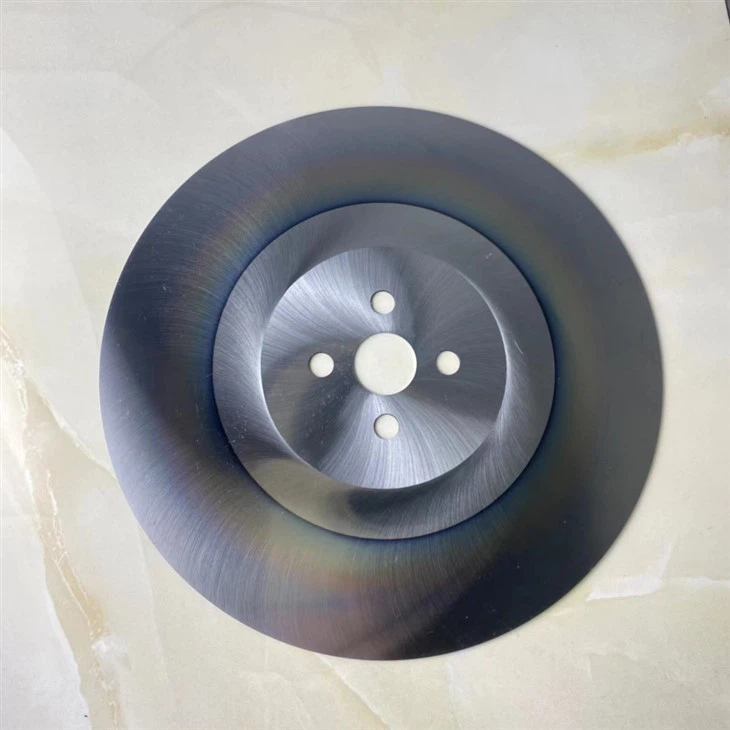

For example, if you're cutting a piece of softwood for a DIY project, a HSS circular saw blade with a positive rake angle will make the job a breeze. You'll notice that the blade glides through the wood, and you won't have to push too hard. This not only saves you energy but also makes the cutting process faster. And as a supplier, I can tell you that our Hss Circular Saw Blade for Metal with a positive rake angle is a popular choice among customers who work with softer metals and non - metallic materials.
However, positive rake angles do have their limitations. Since the tooth is more exposed and has a thinner cutting edge, it can wear out more quickly, especially when cutting harder materials. If you try to cut something like stainless steel with a blade that has a large positive rake angle, the tooth may chip or break under the high stress.
Now, let's talk about negative rake angles. A negative rake angle means that the face of the tooth slopes backward against the direction of cutting. Blades with negative rake angles are typically used for cutting harder materials such as hardened steel, titanium, and other high - strength alloys. The negative rake angle gives the tooth more strength and durability. It can withstand the high forces and stresses generated when cutting hard materials without chipping or breaking easily.
When you use a blade with a negative rake angle, it's like having a strong, tough tooth that can plow through the hard material. The blade may require more power to operate, but it can handle the job effectively. For instance, in industrial settings where they cut thick sheets of hardened steel, our HSS Circular Saw Blades with negative rake angles are in high demand. They can make precise cuts even in the toughest materials.
But there's a trade - off. Cutting with a negative rake angle usually produces a rougher cut surface compared to a positive rake angle. This is because the tooth is more of a "pushing" action rather than a "slicing" action. Also, because more power is needed, it can put more strain on your saw motor.
Zero rake angles are a middle ground between positive and negative rake angles. The face of the tooth is perpendicular to the workpiece surface. Blades with zero rake angles are versatile and can be used for a variety of materials. They offer a balance between cutting efficiency and tooth strength. They can cut both soft and moderately hard materials with reasonable results.
If you're not sure what kind of material you'll be cutting most of the time, a HSS circular saw blade with a zero rake angle might be a good choice. Our HSS Blades with zero rake angles are suitable for general - purpose cutting in workshops where different types of materials are processed.
Another aspect to consider is how the rake angle affects chip formation. When you're cutting, chips are produced as the tooth removes material from the workpiece. The rake angle plays a crucial role in how these chips are formed and removed. With a positive rake angle, the chips tend to be long and thin. They are easily curled and removed from the cutting area, which helps prevent clogging of the blade.
On the other hand, a negative rake angle often produces shorter and thicker chips. These chips can be more difficult to remove, and there's a higher risk of them getting stuck between the teeth of the blade. This can lead to overheating of the blade and a decrease in cutting performance. So, when using a blade with a negative rake angle, you may need to pay more attention to chip evacuation.
The rake angle also has an impact on the cutting forces acting on the saw blade and the workpiece. A positive rake angle reduces the radial and tangential cutting forces. This means that there's less pressure on the saw blade and the workpiece, which can prevent the workpiece from being deformed during cutting. In contrast, a negative rake angle increases these cutting forces, which can be a problem if you're working with thin or delicate workpieces.
In summary, the rake angle of an HSS circular saw blade is a critical factor that affects cutting in many ways. Whether it's the ease of cutting, the quality of the cut surface, the durability of the blade, chip formation, or the cutting forces, the rake angle plays a significant role.
If you're in the market for HSS circular saw blades, it's important to choose the right rake angle based on the materials you'll be cutting. We, as a supplier, have a wide range of HSS circular saw blades with different rake angles to meet your specific needs. Whether you need a blade for soft materials, hard materials, or general - purpose cutting, we've got you covered.
If you're interested in learning more about our products or have any questions regarding the selection of the right rake angle for your cutting applications, don't hesitate to reach out. We're here to help you make the best choice for your cutting operations. Contact us to start a discussion about your requirements and explore how our HSS circular saw blades can improve your cutting performance.
References
- "Metal Cutting Principles" by Paul K. Wright and David A. Dewhurst
- "Machining Science and Technology" by Y. Altintas


